Waterfall countertop care maintenance is essential if you want to preserve the stunning look and long-term functionality of your premium quartz, marble, granite, or solid-surface surfaces. Whether you or a loved one is embarking on a new remodeling project or simply hoping to keep an existing countertop in top shape, maintaining these stylish statement pieces can feel like a daunting responsibility. Fortunately, with the right guidance and a supportive approach, you can protect your investment and ensure your elegant waterfall edge remains a captivating focal point in your kitchen or bathroom.
Below, you will discover why waterfall countertops are worth considering for your space, along with practical guidance on upkeep, material-specific tips for granite and quartz, and the value of professional support before, during, and after installation. By following these recommendations, you can enjoy a luxurious and durable countertop for years to come.
Understanding waterfall countertops
Waterfall countertops are distinctive in that they feature countertop materials extending vertically down the sides of kitchen islands, bathroom vanities, or similar structures, creating a continuous “cascade” along the edges. This refined design offers a contemporary look, while also blending seamlessly into different interior styles.
The unique design
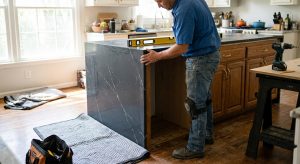
You will recognize a waterfall countertop by its continuous surface that flows over the edge at a 90-degree angle. This means the material, be it quartz, granite, or marble, “falls” gracefully to the floor. The design concept is as much about functionality as it is about style. By wrapping the sides, you protect the cabinetry beneath from bumps and scuffs, and you create a more unified appearance.
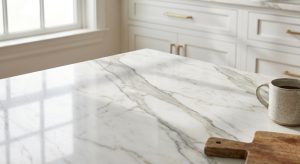
- Many designers appreciate how the design highlights natural veining or patterns in stone.
- The extended edge can conceal bar stools or small appliances standing against the island.
- A waterfall edge can visually anchor your room, creating a centerpiece with significant impact.
Materials and customization
Selecting the ideal material for a waterfall countertop depends on your tastes, intended usage, and budget. Quartz is popular for its durability and non-porous nature, granite offers natural patterns and a unique character, and marble provides timeless elegance. Your final selection may rely on color preference, desired level of upkeep, or the look you want to achieve.
- Popular materials include quartz, granite, marble, quartzite, wood, and even concrete.
- The right finish, such as polished or leathered, can bring out different qualities of each stone.
- A professional waterfall countertop material selection service can guide you if you are unsure which option suits your home best.
Reasons to choose a waterfall countertop
Increasingly, you might see waterfall edges featured in top design magazines or high-end kitchens. While aesthetics initially draw the eye, these countertops offer a variety of practical advantages. If you or a loved one is debating updating your space, here are some compelling reasons to consider opting for a waterfall design:
- Seamless elegance: Waterfall edges form a unified look, removing abrupt visually sharp corners and creating a cohesive flow in your kitchen or bathroom.
- Durability: The added coverage along the edges protects underlying cabinetry and extends the usable surface area.
- Opportunity for storage: Some designs include hidden cabinets or drawers beneath the cascading edges, making practical use of space.
- Versatility: Waterfall edges fit any design style, from minimalistic modern to rustic farmhouse, thanks to the wide spectrum of stone choices.
- Increased resale appeal: A dramatic, on-trend statement piece like a waterfall countertop can often enhance property value and attract potential buyers.
Whether you are drawn to a sleek quartz option or aspire to a dramatic marble surface with bold veining, a waterfall edge can transform your space into a showstopping focal point.
Key steps for care and maintenance
When it comes to waterfall countertop care maintenance, knowing how to protect your surfaces on a daily, monthly, and yearly basis can help ensure that your investment stays in prime condition. The following are essential steps for preserving the elegance and functionality of your waterfall countertop:
Clean regularly and appropriately
Daily cleaning is crucial. No matter what material you select, always:
- Wipe gently with a soft cloth and a mild cleaning agent, such as warm water and dish soap.
- Avoid abrasive scrubbers or strongly acidic products—these can scratch or etch certain stones. A solution of warm water and dish soap is typically gentle enough, but it still does an excellent job of removing grime.
- Blot spills as soon as they occur to prevent staining, especially on porous materials like marble or lightly sealed granite.
Washington Marble Works recommends never using vinegar, bleach, or lemon juice on stone (Washington Marble Works). Even mildly acidic components can damage the sealing, leading to discoloration or etching over time.
Protect against heat
Many stones, including quartz and marble, handle heat moderately well but can suffer thermal shock when exposed to sudden temperature changes. Protect your counters from unnecessary heat stress with these measures:
- Use trivets or hot pads before placing scalding pots or pans directly on the surface.
- Keep curling irons or hair straighteners off your bathroom counters whenever possible.
- Be mindful of items like slow cookers or bread machines that can heat a countertop for hours.
Granite can withstand relatively high heat, but it can still crack if a hot pot is placed abruptly on a cool surface. Similarly, quartz resins can warp or discolor under high heat for extended periods. When in doubt, always place something protective between your appliance or cookware and the countertop.
Promptly seal (when necessary)
Stone materials like granite, marble, or quartzite typically need sealing once a year, though the frequency depends on how heavily you use your countertops and the type of sealer used. A quick water test shows if resealing is due: if water easily soaks in or no longer beads on the surface, it is time to reseal (This Old House).
Quartz, on the other hand, generally does not require sealing owing to its non-porous makeup. However, it still benefits from gentle upkeep and routine cleaning. To streamline this, consider a waterfall countertop sealing service if you would rather rely on experts to keep your counters pristine.
Address spills and stains quickly
Being attentive to minor accidents helps your countertop remain vibrant. For instance:
- Clean cooking oil or tomato juice swiftly, since prolonged contact can penetrate sealants and leave discolored areas, especially on lighter stones.
- Always use non-corrosive cleaners, as recommended by your stone fabricator.
- For more persistent marks or scratches, you can explore a waterfall countertop refinishing service that polishes away damage and restores the original finish.
Establish gentle habits
Simple, daily habits can extend the life of your waterfall countertop. By replacing harsh scrubbing with a soft cloth or storing heavy pots carefully, you will help preserve the crisp, smooth lines of your countertop’s edges. Consider placing floor mats near edges to minimize any knocks from foot traffic, especially if the countertop is located in a busy walkway.
Material-specific guidelines
Different countertop materials require different approaches to maintenance. Whether you choose granite, quartz, marble, or something else, adapting your routine is crucial for an extended product lifespan.
Granite
Granite ranks as a popular choice for waterfall countertops because of its durability, natural veining, and unique patterns. However, it is still somewhat porous:
- Sealing: Granite must be sealed every year or so to guard against stains from liquid, oil, or acidic foods.
- Cleaning: Use warm water, mild soap, and a soft cloth. Abrasive solutions can scratch the surface or erode the seal.
- Heat care: Despite being heat-resistant, you should still place trivets under especially hot pots.
- Repairs: Minor etching or scratches can often be polished out using granite polish. For bigger blemishes, contact a professional installer or your waterfall granite countertop installation provider.
Quartz
Waterfall countertops made of quartz are especially appealing due to their low-maintenance nature and high durability. They are engineered from quartz stone and resin, resulting in a surface that is non-porous:
- No sealing required: Quartz countertops rarely require sealing, making them easy to care for.
- Daily cleaning: Wipe with warm water and mild soap. Steer clear of harsh chemicals.
- Heat sensitivity: Because of the resin content, quartz can warp under direct, intense heat. Use trivets or hot pads to avoid damage.
- Uniform patterns: Quartz slabs can present consistent color and patterning, making them visually cohesive for contemporary spaces. If you are considering an installation, waterfall quartz countertop installation experts can offer additional guidance.
Marble
Marble waterfall countertops deliver a luxurious look with distinctive veining, but they require more diligence:
- Porosity: Marble is porous. Scoring, staining, and etching can be a concern if spills, particularly acidic ones, are not promptly removed.
- Sealing frequency: You may need to seal marble every six months to a year.
- Daily cleaning: Use a pH-neutral cleaner and soft cloth. Avoid bleach, acids, and harsh abrasives.
- Long-term care: Over time, minor etches will likely appear, but you can refresh the stone with professional resealing or polishing. Waterfall marble countertops providers often have specialized kits or in-house technicians to assist with maintenance.
The value of professional installation
Correct installation is the foundation of a long-lasting, low-maintenance waterfall countertop. From precise measurements to proper edge mitering, every stage of the process matters. Substandard fabrication or installation can lead to misalignments, visible seams, and early wear around the edges. Opting for a custom waterfall countertop fabrication can help you get a coherent look and well-aligned joints.
Planning and measuring
An important step in ensuring your countertop fits perfectly is a thorough measurement. A waterfall countertop measurement service uses specialized tools, software, and expertise to capture exact dimensions. This preps you for a tight fit without awkward gaps or overlaps. Proper templating sees that pieces line up correctly—a key consideration in achieving that dramatic waterfall edge.
Fabrication and mitering
To get the classic waterfall design, fabricators typically use mitered edges cut at 45-degree angles. The alignment must be seamless for a fluid “wrap-around” appearance. Companies like waterfall countertop edge mitering services handle the technical challenges associated with angled cuts, allowing patterns and veining to flow gracefully across the edges.
Installation and finishing touches
When the pieces are ready, installation teams need to manage:
- Transportation and positioning: Natural or engineered slabs are often heavy and delicate, requiring careful maneuvering.
- Leveling and adjustments: Even slight irregularities in the floor or cabinetry can create an unbalanced counter.
- Securing joints: Proper adhesives and reinforcements stabilize the mitered edge.
- Sealing and polishing: Final steps often include buffing, sealing, and evaluating the outcome for a smooth, consistent finish.
If you are considering a new project, you can consult waterfall countertop project consultation specialists to tackle any concerns and plan out each stage of your design. With expert guidance, you will have assurance that your countertop will look perfect from day one, saving you from headaches and future repairs.
Enhancing your waterfall countertop design
Beyond day-to-day care, you might explore ways to elevate your waterfall countertop visually and functionally.
- Overhang extensions: Adding an overhang on one side can create a casual dining spot or further protect your cabinetry.
- Shelving and hidden storage: Waterfall edges can disguise open shelving or cunningly concealed cabinets.
- Incorporating matching backsplashes: Let the waterfall aesthetic seamlessly flow into other areas, like custom waterfall countertop backsplash design.
- Lighting effects: Undercounter or side LED lighting can highlight the texture and patterns in the stone, especially for marbles and quartz with distinctive veining.
Your countertop can be a functional workspace and a gathering space all in one. Paired with strategic design choices, it can serve as the heart of your kitchen or bathroom sanctuary.
Maintenance routines for different settings
Many people install a waterfall countertop in a kitchen, where spills and activity are frequent, or in a bathroom, where humidity, heat tools, and cleaning products are factors. Adjust your routine based on where and how you use the countertop.
Kitchen considerations
Kitchens see plenty of daily traffic, cooking stains, and potential for heat damage. Keep the following in mind:
- Frequent wiping: Small bits of food or sauces can etch sensitive materials if left unattended.
- Protecting edges: The overhanging corners can become high-traffic bump zones, so consider placing corner guards temporarily if children are around.
- Regular resealing: If you opted for granite or marble, you will want to re-check the seal more frequently than in a bathroom setting.
- Comprehensive remodeling: A kitchen waterfall countertop upgrade can extend to resurrecting an entire kitchen design, ensuring the cabinets, appliances, and flooring complement your new feature.
Bathroom considerations
You might install a stylish waterfall vanity in a master bathroom or powder room for a sensation of spa-like luxury. However, these areas have unique demands:
- Moisture management: Ensure good ventilation to mitigate steam damage, mold, or mineral deposits.
- Chemical caution: Many bathroom products contain strong chemicals. Store them safely to reduce accidental spills that could harm your counter.
- Heat tools: Hairdryers, curling irons, and straighteners produce heat. Using protective mats or trivets in your bathroom can be just as important here.
- Enhanced atmosphere: For an elevated effect, you can add accent lighting under the vanity or incorporate a waterfall bathroom vanity waterfall design that coordinates with the rest of your space.
In either setting, treat your waterfall countertop with mindful care, and it will reward you with long-term beauty and performance.
When to consider refinishing or replacing
At times, even the best care routines are not enough to keep your countertop in pristine shape. Perhaps daily use has caused chipping, or you inherited an older installation from a previous homeowner. If you notice deep etches, persistent stains, or cracks, you may benefit from a waterfall countertop refinishing service. Refinishing can remove worn layers, apply new sealant, and restore the countertop’s original shine.
However, if the damage is extensive, or if you want a completely new surface, you might choose to invest in a waterfall countertop replacement service. Replacing the countertop could be more cost-effective than attempting multiple rounds of intensive repairs, especially if the underlying structure is compromised.
Setting the stage for success
The investment you make in a premium waterfall countertop can last for decades if you adopt proactive maintenance and lean on professionals for installation or refinishing. By understanding common issues like staining, heat damage, and the necessity for proper sealing, you dramatically reduce any risk of lasting harm.
For many homeowners, scheduling a residential waterfall countertop installation or a commercial waterfall countertop installation is a straightforward decision once they recognize the synergy between function and style. The countertop goes beyond aesthetics, offering strength and utility in high-use areas.
Frequently asked questions
Below are five common questions people have about waterfall countertop care maintenance and installation, along with concise answers to guide you:
1. How often do I need to reseal my waterfall granite or marble countertop?
It generally depends on usage and the type of sealer. Most granite and marble countertops need sealing every 6-12 months, but you can conduct a water test: if water fails to bead up on the surface, it is time to reseal. Quartz, meanwhile, typically does not require sealing.
2. Can I place hot pots or pans directly on my countertop?
It is best to protect your waterfall countertop using trivets or hot pads. While granite is heat-resistant, it can crack if exposed to sudden temperature changes. Quartz can warp or discolor due to its resin content. Always err on the side of caution.
3. Is professional installation really necessary for a waterfall edge?
Absolutely. A waterfall countertop demands exact measurements, 45-degree edge cuts, and flawless miter joints. Inaccurate measurements can lead to uneven edges or visible gaps, so consider hiring experts like waterfall countertop contractors near me for a highly accurate result.
4. How do I remove stubborn stains?
First, use mild soap and water. If the stain persists, consult a professional or your countertop installer for an approved cleaner. Avoid harsh chemicals like bleach or vinegar, as they can damage the protective seal and the stone itself.
5. What if my countertop gets chipped or scratched?
Minor blemishes in granite or marble can sometimes be buffed out with a high-quality polish. For larger damage, contact a waterfall countertop specialist or reach out to your original fabricator. The sooner you address the damage, the easier it is to restore the countertop to its initial appearance.
Concluding thoughts
Waterfall countertops represent a sleek, contemporary addition to any kitchen or bathroom, providing you with both beauty and strength. By adopting proper waterfall countertop care maintenance strategies—ranging from routine cleaning and timely sealing to using protective measures against heat and chemical damage—you can safeguard your surfaces for the long haul. Furthermore, choosing professional support for fabrication and installation sets the stage for a perfect fit, flawless edges, and minimal future complications.
Tailoring these tips to your chosen material, whether it is granite, quartz, marble, or another stone, can make a remarkable difference in preserving the countertop’s brilliance. From daily wiping to occasional sealing and refinishing, you can instill confidence in your investment, ensuring your waterfall edge continues to captivate visitors and family members alike.
In the end, you or your loved one may decide that a waterfall countertop is exactly what your premium quartz or marble remodel needs. When you are ready to move forward, tapping into a waterfall countertop project consultation can help guide you through material selection, cost estimates, and the entire installation process. By taking a proactive, caring approach, you not only maintain the graceful charm of your waterfall countertop but also fortify the heart of your home for many years to come.