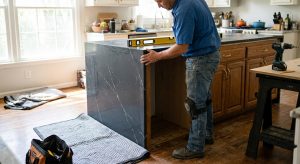
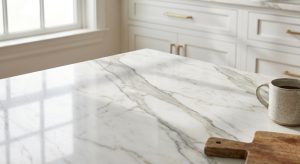
Understanding waterfall countertop support requirements
When you decide to transform your kitchen or bathroom with a premium quartz, marble, granite, or solid-surface countertop, you deserve a final install that stands the test of time. At the forefront of luxury design, waterfall countertops can elevate your space to new heights of style and practicality. However, waterfall countertop support requirements must be taken seriously to ensure that this striking feature remains safe, functional, and visually flawless. In this comprehensive guide, you will learn how to meet these structural needs so that you or a loved one can enjoy a stunning, secure, and durable waterfall countertop for years to come.
What a waterfall countertop really is
A waterfall countertop is a design that extends the countertop material seamlessly down the sides of the cabinetry to the floor, creating a continuous “cascading” effect. Traditionally found in modern or contemporary kitchens, a waterfall edge can also be incorporated into bathrooms and other living areas where an extended counter profile adds artistic flair. When it comes to premium stone materials—such as quartz, marble, granite, or solid-surface options—this design draws attention to the beauty of the stone’s veining or pattern, making it a show-stopping focal point.
Why you or a loved one might choose this design
Selecting a waterfall edge goes beyond mere aesthetics. The design protects the sides of your counters and cabinetry, mitigating the damage that everyday bumps and spills might otherwise cause. With the correct waterfall countertop support requirements in place, you also gain:
- A statement piece that enhances the overall look and feel of the space
- Added durability, thanks to sturdy stone construction
- A luxurious aesthetic that can segue smoothly into other interior design elements
Because the material itself becomes a continuous flow from the top surface to the floor, many homeowners and interior designers view it as synonymous with a refined style. However, this sleek, modern look demands a sound structural plan, especially when the countertop extends beyond the cabinets without direct support underneath.
Explore the fundamentals of support
Material considerations
Waterfall countertops can be crafted from quartz, marble, granite, quartzite, wood, or even concrete. However, each of these materials has specific qualities that affect support needs.
- Quartz: Renowned for durability and consistency in pattern, quartz is a top contender for a waterfall edge. According to research from Caesarstone, quartz can remain intact under pressure, but still requires enough foundational support to maintain structural integrity.
- Marble: This natural stone offers an elegant, timeless aesthetic. Proper sealing and protective measures are essential to preserve marble’s beauty. If you are interested in learning more about how marble can bring luxury to your space, visit our page on waterfall countertop marble elegance.
- Granite: Despite granite’s robustness, its natural veining patterns create weaker areas that may need brackets, brackets with corbels, or additional reinforcement. For more insights on how granite stands up in waterfall applications, look into granite waterfall stain resistance.
- Quartzite: A strong, natural stone that merges the durability of quartz with organic patterns. If you want to see how quartzite can benefit your waterfall design, consider reading quartzite waterfall durability benefits.
Each stone’s thickness, hardness, and weight all play into how the structure must be supported beneath. Relying on reputable manufacturers and qualified fabricators ensures that the stone type you choose can confidently anchor a waterfall installation.
Overhang guidelines
One defining characteristic of a waterfall countertop is its extended slab that “runs off” the edge of the cabinet. Often this means areas of the counter may not have a supporting wall or cabinetry directly underneath. Common guidelines—based on Caesarstone insights—recommend:
- Keeping the overhang under 15 inches without additional support, though 12 inches is standard for a seating area.
- Ensuring that 70% or more of the countertop is directly supported by cabinetry when using quartz.
- Recognizing that the maximum allowable overhang is often 1/3 the depth of the countertop.
For seating purposes, you typically want 24 inches of length per person. This means if you plan a waterfall island with a bar-style overhang, you need to make sure that each seat has enough space to fit arms, knees, and personal comfort during meals or gatherings.
Brackets, corbels, and columns
When a thicker slab or a larger overhang is part of your design, you need additional support. Specialized brackets or corbels can secure the countertop in position without ruining the waterfall’s clean lines. Some individuals opt for sleek metal rods or sturdy posts that blend with the overall decor. Regardless of the reinforcement method, each bracket or post must be designed to bear the weight of the unsupported portion of the stone.
Comparing support methods
| Support Method | Pros | Cons |
|---|---|---|
| Brackets | Minimal visual footprint, relatively easy to install | May require specialized fabrication for heavier stones |
| Corbels | Decorative, can match or accent cabinetry | Can intrude on leg spacing if poorly placed |
| Columns | Very sturdy if installed correctly | More visually prominent than brackets |
| Additional Cabinets | Continuous storage under the overhang | Might limit legroom for seating |
In areas exceeding a 12-inch overhang, or if you want to extend your countertop up to 15 inches, corbels or comparable supports typically become essential for long-term structural stability. By installing these supports, you protect your investment from cracks or warping.
Space planning
Good space planning ensures that your waterfall countertop remains both practical and visually impactful. For instance, Lesher Marble recommends having at least 3 feet of clear space around the waterfall island to allow comfortable foot traffic. Meanwhile, if you plan to accommodate bar stools or chairs, confirm that you have adequate clearance for people to slide in and out without bumping their knees against the stone edge.
To dive deeper into optimizing your layout, see our tips on waterfall countertop space planning. With the right forethought, you can properly balance the elegant flow of a waterfall edge with ergonomic design.
Understand key structural factors
The importance of thickness
Waterfall edges often measure 2 to 3 inches thick, sometimes more if aiming for a dramatic appearance. The thickness contributes to the countertop’s capacity to handle weight. A slab too thin may look aesthetically fragile, while a slab too thick will require strong brackets or cabinet connections to remain held upright. Aim for a thickness that suits your design without compromising support requirements.
Maintaining alignment
When planning for a waterfall effect, each piece must align perfectly at the seams to create a continuous pattern. That process is known as “bookmatching” or “vein matching,” especially for materials with visible veining like marble or granite. Precise mitered edges along the joint are fundamental to keep the pattern consistent and prevent weak spots. Skilled fabricators use computer numerical control (CNC) machines to ensure accurate cuts, which is why an unqualified installer can inadvertently cause misalignment or stress cracks.
Accounting for seating requirements
When your kitchen island doubles as a seating area, waterfall countertop support requirements intensify. If you plan to have your family or guests sit along the waterfall edge, you must think about:
- Knee clearance: Typically, 15 inches of vertical clearance between the top of a stool or chair and the bottom of the countertop.
- Overhang depth: Extending anywhere from 12 to 18 inches for comfort. You can extend beyond 12 inches only with additional support brackets.
- Traffic flow: Ensure individuals can easily slide in and out of their seats without feeling cramped.
Because your seat placements may be near or under the waterfall edge, it’s vital that the entire structure is stable and that no sudden weight shifts compromise it.
Considering ADA-friendly dimensions
If you or a loved one is creating a kitchen that meets ADA (Americans with Disabilities Act) guidelines or simply desires better accessibility, plan for lower countertop heights and wider clearance. Standards often call for a countertop depth of around 17 inches, a height of 27 to 28 inches from the floor (though 28 inches is simply the recommended minimum for accessibility), and enough legroom for a wheelchair user if applicable. Always coordinate these measurements with the specifics of your chosen waterfall design, because lowering the height of the countertop can influence how you reinforce the overhang.
Ensure proper installation steps
Partner with trustworthy professionals
Waterfall countertops demand a high degree of technical skill. The detailed cuts, alignment of seams, potential for mitered edges, and thorough structural considerations mean hiring experienced fabricators is essential. If you or your loved one is new to this type of renovation, consider enlisting contractors who specialize in stone installations.
Moreover, professional installers do more than just cut and attach the stone. They:
- Evaluate your existing cabinets or frame for structural compatibility
- Recommend the best bracket or corbel systems
- Assess total weight to avoid undue stress on your floors
- Understand how to preserve patterns when the slab “turns the corner” at the waterfall edge
To learn more about the benefits of an expert approach, you can explore waterfall countertop professional installation. Professional involvement from the early planning stages is the best way to guarantee an outcome that merges style, security, and longevity.
Prepare the space thoroughly
Before fabrication or installation:
- Check the flooring: Confirm that the subfloor can handle the countertop’s weight, particularly if you’re adding a second slab down the side.
- Assess the cabinets: In many cases, you might need additional corner reinforcements or crossbeams to hold the slab securely.
- Finalize the design layout: Provide exact measurements to the fabricator so they can plan the cuts, arrange the veining, and install the supports.
- Consider your appliances: If any appliances, such as dishwashers or microwaves, sit under the countertop, plan space around them.
Proper preparation significantly reduces surprise complications during installation, which can drive up costs and extend timelines.
Focus on bracket placement
When your design calls for extended overhangs of more than 12 to 15 inches, be sure the brackets or corbels are sized and spaced correctly. Ill-fitting hardware can cause stress fractures or visible sagging over time. Installing them directly into wall studs, or into specially added support beams, helps distribute the weight and keep everything flush.
For larger waterfall islands, you might need full-length rods or columns that run along the inside corners of the island’s “waterfall drop” for maximum stability. This approach ensures all angles of the countertop have adequate load distribution.
Keep an eye on finishing details
Mitered corners need to be smooth, with tight seams that match the flow of the stone’s pattern. Proper adhesives and epoxies must be used to keep moisture out of the joint, which reduces any risk of expansion or warping. These adhesives typically blend so seamlessly with the stone that no visible line remains, preserving the illusion of a single slab seamlessly bending downward.
Weigh the benefits and drawbacks
Key advantages
Opting for a waterfall countertop can yield numerous perks, particularly when it comes to modern or contemporary spaces:
- Visual Impact: The vertical stone slab provides a bold design statement that can serve as the centerpiece in your kitchen or bathroom.
- Enhanced Durability: The stone side panels protect cabinets from dents and scrapes, especially in high-traffic areas.
- Seamless Look: For premium materials with intricate veining, a waterfall design maximizes continuity and visual flow throughout the piece.
- Product Value: Many prospective homeowners or guests are captivated by the upscale flourish carved into waterfall edges, reflecting a commitment to quality.
If you are curious about how different finishes and edges can further improve the design, consider our resource on waterfall countertop edge styles.
Potential limitations
Despite its elegance, be mindful of a few potential drawbacks:
- Higher Cost: As noted by Caesarstone US, the slab, fabrication, and additional labor for waterfall countertops can add thousands of dollars to your renovation budget. For more on financial planning, explore the cost of waterfall countertop per square foot.
- Style Compatibility: Waterfall counters fit best in modern, contemporary, or transitional spaces. In more traditional homes, a waterfall might feel out of place.
- Limited Seating: If a waterfall design extends fully to the floor, you might lose potential legroom for bar seating. Additional design tweaks or support brackets are needed if you hope to maximize seating capacity.
- Extra Support: The top-heavy needs of a waterfall slab might demand more than a standard countertop, such as specialized brackets or corbels, to maintain stability.
If you are curious about all the pros and cons in one place, feel free to consult waterfall countertop pros and cons. Understanding each angle in advance can help you make an informed choice that suits your design goals.
Why you should choose a waterfall countertop
Waterfall countertops stand out for their timeless beauty and practical appeal. If you are searching for a highly durable, low-maintenance installation, you could consider a quartz waterfall approach. For enthusiasts of classic elegance, a marble waterfall exudes luxury and warmth. Granite or quartzite might be for you if you want a unique mix of natural patterns and resilience.
In any case, the design is not just about making the biggest statement. A waterfall edge can also blend subtlety, continuity, and a sense of harmony with the rest of your cabinetry and flooring. By addressing waterfall countertop support requirements, you or a loved one can enjoy a premium stone finish that will remain steadfast for the long haul.
Long-term maintenance and care
Because of its size and weight, a waterfall countertop is designed to last decades with minimal upkeep. Basic maintenance tips generally include:
- Wiping up spills immediately: Especially critical for porous stones like marble or granite.
- Using mild, pH-neutral cleaners to avoid etching your countertop’s finish.
- Reapplying sealant when recommended by your installer or the stone’s fabricator.
- Inspecting bracket connections every so often, ensuring no loosening or corrosion is present.
For specific upkeep routines per material, you might find our resource on waterfall countertop maintenance tips helpful. Keeping your countertop pristine will discourage chips, fractures, or stains and ensure your investment continues to shine.
Creating a timeless focal point
A waterfall slab can become the beating heart of your kitchen, especially if you enjoy entertaining. Family members or friends can gather around the island, admiring the uninterrupted stone face. If you are seeking a showpiece that commands attention from every angle, the waterfall design may be exactly what your space needs.
If contemporary style rules your aesthetic, a waterfall countertop for modern kitchen might blend flawlessly into your surroundings. Meanwhile, if you favor striking centerpieces on your island, waterfall countertop for contemporary island can help integrate your design vision. And if you are intrigued by the latest trends, discover more about waterfall countertop design trends to stay ahead of the curve.
Planning for safety and security
While water, spills, and everyday wear are normal considerations, waterfall edges also protect the sides of your cabinets. In addition, they can reduce the likelihood of people catching clothing or bumping the corner at hip height. However, if you anticipate heavy traffic, large families, or a bustling entertaining space, check out waterfall countertop installation risks to learn how to mitigate common issues.
Reinforcements for peace of mind
If you imagine placing heavy appliances on or near the waterfall extension—such as a beverage fridge within the island—do not forget that this extra load must be distributed properly. Lesher Marble also recommends that your installer evaluate the subfloor where the slab meets the ground. If there is any concern that the floor might not fully support the slab’s weight, your contractor can add reinforcing brackets or restructure the base of the room.
To be certain of long-term stability, some homeowners choose to incorporate hidden metal rods or support beams along the inside corners of the island or down the backside of the waterfall material. This level of reinforcement ensures the countertop remains secure no matter how lively your gatherings become.
Frequently asked questions (FAQ)
-
How much support does a waterfall countertop need?
The exact requirements depend on your material’s thickness, the size of your overhang, and the weight-bearing capacity of your cabinets and floor. Generally, extended overhangs of more than 12 to 15 inches require brackets or corbels. Make sure at least 70% of the countertop is supported by cabinetry if you are using quartz. -
Can you use any material for a waterfall countertop?
Yes, but each material has unique properties. Quartz, marble, and granite are popular because they are durable and elegant. Wood and concrete are other possibilities but may demand custom reinforcements. Always choose a material that fits your aesthetic and structural priorities. -
Does a waterfall countertop increase home value?
A beautifully executed waterfall edge often boosts your kitchen’s appeal. Many buyers equate the feature with luxury and modern style. While it may not purely determine resale value, it can add significant allure and differentiate your home from others in the market. -
What is the cost difference compared to standard counters?
Waterfall installations typically cost more because they use extra slab material and require mitered edges, specialized fabrication, and professional installation. Additional expenses can reach several thousand dollars, especially if you factor in the cost of stone, bracket systems, and CNC mitering fees. If you want to break down expenses, see cost of waterfall countertop per square foot. -
Is professional installation always necessary?
DIY installations for waterfall countertops are complex and risky, especially when ensuring precise alignment, secure brackets, and seamless pattern continuity. We strongly recommend seeking experienced contractors who understand the design’s technicalities. If you still wish to explore a personal project, read waterfall countertop diy considerations to weigh the pros and cons.
By embracing the right combination of artistry, mechanical reinforcement, and professional expertise, you can successfully meet all waterfall countertop support requirements. This design allows you or a loved one to enjoy a premium statement piece that marries sustainability with refined beauty. Whether you favor the resilient shimmer of quartz, the timeless elegance of marble, or the rugged appeal of granite, a waterfall edge is poised to become a centerpiece of your home for years to come.