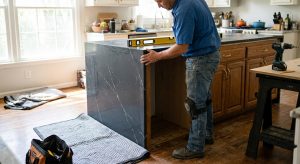
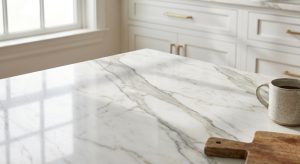
When you picture a show-stopping kitchen island or a sleek bathroom vanity, you might imagine a design where the countertop material cascades elegantly down the sides. This visually striking feature, often referred to as a waterfall edge, can be fashioned from many materials, ranging from quartz to marble to granite. Yet, granite often stands out for both endurance and timeless style. One of the most appealing qualities of granite waterfall countertops is their excellent stain resistance. By choosing this format, you can achieve both lasting beauty and practical functionality.
In this guide, you will discover why granite remains a staple for many homeowners, how a waterfall edge can enhance the visual continuity of your space, and how granite waterfall stain resistance can keep your investment looking pristine. We will also talk about maintenance tips, comparisons to other popular materials, and five frequently asked questions. By the end, you will be equipped with the knowledge you need to decide whether a granite waterfall countertop is right for you.
Understanding the appeal
The aesthetic factor
A waterfall design creates the impression that your countertop material is pouring seamlessly toward the floor, showcasing any distinctive veining or grain patterns. Granite complements this effect beautifully because it features visible mineral grains that vary in size and color. According to various geological studies (Chippewa Stone), the stone’s coarse-grained, granular texture highlights its natural beauty. This uniqueness allows you to have a statement piece in your kitchen or bathroom that immediately draws the eye.
Choosing a granite waterfall style can help you achieve the following:
- A bold focal point: The cascading effect frames the center of the room.
- An illusion of continuity: The smooth transition from horizontal to vertical lines makes the space feel more cohesive.
- Showcasing granite’s character: The large, unbroken surface emphasizes the stone’s color patterns and natural veining.
The functional benefits
Granite is prized for its resilience. It can handle considerable wear-and-tear, from cooking spills to high traffic. With an effective sealant, granite can repel most liquid absorption, thereby significantly reducing the likelihood of permanent stains (Better Homes & Gardens). This strong defense, combined with the vertical extension typical of waterfall designs, means your countertop edges have an extra layer of material that resists dings, chips, and other everyday damage.
Practical advantages include:
- Enhanced durability: Granite has a high melting point and superb toughness.
- Ease of cleaning: A smooth, sealed granite surface is straightforward to wipe down.
- Potential for seamless integration: With a waterfall edge, you enjoy continuous flow along the sides, minimizing joint seams where moisture could penetrate.
If you would like a concise overview of the pluses and minuses of this style, you can further explore waterfall countertop pros and cons as you plan your remodel.
Exploring granite countertop fundamentals
Composition and durability
Granite is an igneous rock composed primarily of quartz, feldspar, and mica. The proportions of these minerals influence both the color and pattern of the final slab. Thanks to its crystalline structure, granite is exceptionally hard and non-porous. According to research shared by geologyscience.com (Geology Science), the coarse-grained texture of granite often directly contributes to its durability, as it provides a strong interlocking network of minerals.
Important reasons behind granite’s durability include:
- High hardness on the Mohs scale, meaning it resists scratches.
- Heat resistance, making it suitable for busy kitchens.
- Natural resilience against weathering and minor impacts.
Why sealing matters
Although granite is known for its relative non-porosity, it still contains microscopic pores that can trap fluids if spills are left to sit for too long. Sealing granite helps close up these pores, ensuring that substances like coffee, red wine, or oil do not penetrate deep into the stone. Multiple sources, such as R&D Marble, emphasize that periodic sealing strengthens the natural stain resistance, allowing you to quickly and efficiently wipe away spills and maintain a spotless surface.
Key points about sealing include:
- Frequency: Most experts recommend sealing granite at least every one to three years, depending on usage.
- Types of sealants: Penetrating sealers with fluorocarbon aliphatic resins often perform best (Lesher Marble).
- Application: Even distribution of sealant is necessary, with careful buffing to avoid hazy spots.
- Testing: You can test if your countertop needs resealing by dropping water on the surface. If the water is absorbed instead of beading up, it is time for a new coat of sealant.
Proper sealing plays a significant role in granite waterfall stain resistance. When executed effectively, it helps preserve the countertop’s sheen and barricades the stone’s internal pores from external elements.
Stain resistance explained
The role of porosity
Granite’s ability to resist stains stems primarily from its low porosity. On a microscopic level, this means there are fewer pathways for liquids to seep in. However, “fewer” does not mean “none,” which is why it is possible, though less likely, for granite to stain if subjected to standing spills. Hard water mineral deposits can also form cloudy rings on the surface, particularly in areas like Bethel, CT, or Rye, NY (Academy Marble & Granite).
A few essential strategies to minimize staining:
- Clean up spills right away, especially oily or acidic substances.
- Use cutting boards and trivets to prevent deeper abrasions or heat shock.
- Avoid harsh chemicals or abrasives that can degrade the sealant over time.
Effective sealing techniques
To boost stain resistance, apply a high-quality penetrating sealer. As you select a product, make sure it is suitable for use on food-prep areas and does not contain ingredients that can harm the stone, such as linseed oil or citrus liquids (Lesher Marble). Once you coat the stone, let it rest according to the manufacturer’s instructions before buffing out any excess. This ensures the sealer fully bonds with the stone’s pores.
For everyday care and best results:
- Wipe the countertop with warm water and mild dish soap.
- Dry the surface with a clean, soft cloth.
- Apply sealant as recommended, focusing on areas prone to frequent use.
Minimizing everyday risks
While granite is naturally robust, certain routines will keep the surface sparkling and mitigate potential problems:
- Promptly blot up spilled liquids with a paper towel instead of wiping them around.
- Use non-abrasive, pH-balanced solutions for daily cleaning.
- Do not place hot pans directly on any natural stone, including granite. Although it can handle warmth, consistent exposure to very high heat may degrade the seal or cause superficial cracks.
- Refrain from cutting items directly on granite. Use a cutting board to avoid scratches and preserve sharp knives.
You can find additional ideas for general upkeep by looking into waterfall countertop maintenance tips. These guidelines can help you prolong the life and luster of your granite waterfall countertop.
Waterfall design considerations
Seamless continuity
A waterfall countertop extends the same slab material from the horizontal surface down the vertical sides, creating a continuous flow. This eliminates abrupt edging or lines that might interrupt the visual unity. If you opt for granite, any unique veining or color gradation can wrap seamlessly, enhancing the look from multiple angles. According to industry experts, waterfall designs bring an elegant, modern look that highlights the stone’s natural beauty.
If you want to see how the visual flow can continue onto a backsplash, you might enjoy reading about waterfall backsplash waterfall continuity. Coordinating the design from the countertop to the backsplash can further enhance cohesion, helping you achieve a dramatic impact.
Design synergy
In many contemporary kitchens, minimalism and open-concept layouts are popular. A granite waterfall island fits perfectly into these spaces because it acts as both a functional workspace and a sculptural statement piece. Even in transitional or classic styles, a granite waterfall can appear refined because of the timeless appeal of the stone. You can match or contrast cabinet colors to highlight the monochromatic veins or subtle flecks of color in the granite.
Factors to keep in mind when planning for synergy:
- Slab selection: Remember that no two slabs of granite are exactly alike, so choose carefully to match the overall design.
- Edge style: Waterfall edges often use a mitered edge for a clean, continuous look.
- Color harmony: Granite can be white, gray, black, red, green, or even pink, so pick a hue that elevates the rest of your room.
Pairing with your space
You have the freedom to plan your waterfall edges in different areas of your home. Kitchens remain the most common choice, but bathroom vanities or bar areas can be equally striking. The presence of a vertical run, however, calls for careful measurements to ensure the extended portion does not interfere with foot traffic or appliance doors. For additional design information, have a look at waterfall countertop for contemporary island if you prefer a modern vibe, or read about waterfall countertop space planning to make sure you have the best layout possible.
Granite vs other materials
Granite vs quartz
Quartz is an engineered stone constructed from crushed quartz bound together with resins. It is extremely durable, easy to clean, and comes in a wide range of patterns, some of which mimic granite. However, because quartz is non-porous by nature, it does not require sealing. This aspect can be convenient if you want to reduce long-term maintenance. On the other hand, granite remains a top choice for those who prefer the authenticity and organic color variations of natural stone. If you are curious about quartz for a waterfall design, you can visit quartz waterfall waterfall design for additional pointers.
Granite vs marble
Marble is synonymous with elegance, particularly for waterfall edges, but it is comparatively softer and more porous. This makes marble more susceptible to etching from acidic substances and staining from certain liquids. Maintenance, including sealing, is more demanding if you choose marble. Still, many homeowners believe marble’s beauty justifies the extra care. If marble’s veining and luxurious appeal intrigue you, you might enjoy reading about waterfall countertop marble elegance, which covers how to preserve that refined look.
Wood as an alternative?
While it may seem unconventional, some designers use wood for waterfall edges. Wood can add warmth and character, but it must be sealed meticulously to prevent moisture damage. Scratches and wear also appear more readily on wood, so it may suit spaces where aesthetics are more important than heavy-duty functionality.
If you are torn between materials, consider your day-to-day lifestyle. Granite typically offers a high degree of resilience and stain resistance. This makes it an exceptional choice for areas that see plenty of action, particularly kitchens.
Practical tips for maintenance
Daily cleaning
Maintaining a granite waterfall countertop day to day is usually straightforward. A few basic steps can help you protect your investment:
- Wipe surfaces with a soft cloth or sponge dipped in warm, soapy water.
- Avoid any ammonia-based or acidic cleaners, such as vinegar or lemon.
- Dry thoroughly to avoid water spots or mineral build-up, especially if you live in an area with hard water.
By pairing this routine with periodic inspections, you can quickly spot potential issues and address them before they worsen.
Stain removal
Even if you have sealed your granite countertop, accidents happen. Should a stain occur, you can often treat it with a homemade poultice:
- For oil-based stains: Mix baking soda with water to form a paste, spread it over the stain, cover with plastic wrap, then let it sit for 24 hours before rinsing.
- For water-based stains: Use baking soda with hydrogen peroxide instead of water (Better Homes & Gardens).
If you notice hard water deposits, a non-abrasive pad and a bit of gentle scrubbing can help. According to Academy Marble & Granite, a paste of baking soda and water can also be effective for stubborn rings around faucets. Just remember not to use highly acidic solutions, which can degrade the sealant.
Resealing schedule
Over time, sealant wears off due to cleaning, friction, and daily stress. To preserve granite waterfall stain resistance, follow these guidelines:
- Perform a bead test every six to twelve months. If water droplets flatten out quickly without beading, it may be time to reseal.
- Use high-quality sealers recommended for food-contact surfaces.
- Apply two coats to areas that see the most action, such as kitchen islands or cooktop surrounds.
For a deeper look at how to preserve your countertop’s longevity, check out waterfall countertop replacement guidance to understand when, if ever, you might consider upgrading or refinishing.
Frequently asked questions
-
Will a granite waterfall countertop add value to my home?
Many homeowners and real estate professionals believe that granite can boost property value. It is often seen as a high-end, durable feature. A waterfall design amplifies the visual impact, potentially making your kitchen or bathroom more appealing to future buyers. -
How do I know if my granite waterfall countertop is fully sealed?
A quick way to check is to drop a few droplets of water on the surface. If they bead up for several minutes without absorbing, your seal remains strong. If the water seeps in or darkens the granite quickly, collaborate with a professional or use a DIY sealer to restore protection. -
Do waterfall edges require special installation techniques?
Yes. Installing a waterfall edge typically involves a precise miter cut where the top meets the vertical piece. Achieving a seamless joint with granite requires skill and precise measurements, so you may want to investigate waterfall countertop professional installation for best results. -
Are there specific cleaning products I should use?
Look for pH-balanced cleaners explicitly marked safe for natural stone. Steer clear of harsh bleach, vinegar, or acidic formulas. Warm soapy water is usually your best everyday friend. If you need something extra, a granite-specific cleaner or mild stone soap will help keep your countertop shiny and sanitized. -
Is granite prone to chipping along the waterfall edges?
While granite is tough, it is not completely immune to chipping if struck with a heavy object at the right angle. The mitered edge can be vulnerable to direct impact. However, normal household use should not pose significant risks, especially when your countertop is installed properly and well-sealed.
Conclusion
Choosing a granite waterfall countertop is an investment in both functionality and style. Granite’s inherently low porosity and remarkable hardness, combined with meticulous sealing, give you a highly stain-resistant surface that suits busy kitchens or luxurious bathrooms equally well. Waterfall edges amplify the natural beauty of the stone, allowing the unique veining and patterns to stand out while creating an artful, cohesive aesthetic.
If you want to explore new looks, you might enjoy reading about waterfall countertop design trends, or learn more about the particular strengths of granite by reviewing waterfall countertop granite benefits. These resources can help you navigate design decisions, installation steps, and best practices for long-term care.
Ultimately, by understanding how porosity, sealing, and proper daily maintenance contribute to granite waterfall stain resistance, you can confidently invest in a countertop that retains its allure for years to come. With a little routine care and timely resealing, your countertop will continue to deliver everyday pleasure and an undeniable “wow” factor to everyone who walks into your space.