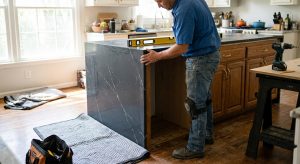
The 2023 NAR Remodeling Impact Report ranked kitchen upgrades among the top five projects for resale value recovery, with countertop replacements consistently delivering some of the strongest returns of any single surface improvement. If you’re searching for a countertop installer near you in Charlotte, the decision goes well beyond who can pour a slab on your kitchen base cabinets. Getting it right means knowing how to evaluate fabricators, read a quote, choose the right material for your life, and avoid the mistakes that turn a promising renovation into a regrettable one.
Why Charlotte Homeowners Are Investing in Countertops Right Now
According to the 2023 NAR Remodeling Impact Report, kitchen renovations recover an average of 67% of project costs at resale, with countertop upgrades frequently cited as the line item buyers notice first. In a market like Charlotte, where median home prices rose sharply through the early 2020s and competition among sellers remains real, a dated countertop actively works against your listing. What this means in practice: a countertop upgrade isn’t just cosmetic. It changes how buyers perceive your entire kitchen, and it signals maintenance and care throughout the rest of the home.
The Charlotte metro has also seen sustained growth in mid-to-upper renovation activity. Homeowners who bought during the 2020-2022 surge are now past the two-to-three-year mark and reaching the stage where they’re ready to personalize and invest. That means fabricators and installers in the Charlotte area are busy, lead times are real, and timing your project thoughtfully matters.
What to Look for in a Charlotte Countertop Installer
A 2022 survey by the National Association of the Remodeling Industry found that homeowners who reported the highest satisfaction with their contractor also rated pre-project communication and verified credentials as the top two factors in their decision. Price ranked fifth.
The four qualifications that actually matter when evaluating a countertop installer in Charlotte are: local fabrication capability, material range, a track record of completed installs, and written warranty terms. Before you call anyone, check whether they fabricate in-house or subcontract that work. That single detail affects timeline, accountability, and quality control more than almost anything else.
Fabrication In-House vs. Third-Party
When a company handles its own fabrication, the person cutting, edging, and finishing your slab is the same person whose reputation is on the line at installation. According to a 2021 trade report from the Marble Institute of America, projects routed through third-party fabricators had a higher incidence of measurement errors and edge inconsistencies, primarily because the information chain between the installer, the fabricator, and the homeowner introduced gaps that no one owned.
What this means for your timeline: in-house fabrication typically shortens the project by three to seven days and eliminates the finger-pointing that happens when something goes wrong at seam or cutout. Ask directly: “Do you cut and finish slabs on-site at your facility, or do you send the work out?” The answer tells you who owns the problem if the island cutout is off by a quarter inch.
Licensing, Insurance, and Warranty Coverage
A 2020 study by the Insurance Information Institute found that roughly one in five homeowners who experienced a contractor dispute reported the contractor lacked sufficient liability coverage at the time of the project. In North Carolina, countertop installers working on residential projects are subject to general contractor licensing requirements through the NC Licensing Board for General Contractors, and any fabricator doing structural or load-bearing work must be licensed.
Before the first site visit, ask for the company’s license number and verify it at nclbgc.org. Confirm they carry general liability and workers’ compensation coverage. Then ask for the warranty in writing: what it covers, how long it lasts, and who you call if a seam lifts six months after installation. A fabricator who hesitates on any of these questions is telling you something.
Experience With Your Specific Material
Granite, quartz, and quartzite are not interchangeable from a fabricator’s perspective. A 2019 report from the Marble Institute of America documented that material-specific installation failures, including cracking near cutouts and seam separation, were significantly more common when installers worked outside their primary material experience. Quartzite, for example, requires different blade speeds and support strategies than engineered quartz. Marble has very specific sealing and handling requirements that general stone fabricators sometimes underestimate.
During your quote call, ask this: “How many quartzite or [your material] projects have you completed in the past year, and can you show me photos?” A fabricator with genuine experience answers immediately and specifically. One who pivots to generic portfolio references probably doesn’t do much of that material.
Countertop Materials Available in Charlotte
The 2023 NKBA Kitchen & Bath Market Index identified quartz as the most specified countertop material in mid-to-upper residential projects for the third consecutive year, followed by granite and quartzite. But popularity doesn’t determine fit. The right material depends on how you cook, how much maintenance you’ll actually do, and what your long-term plan for the home is.
Granite and Natural Stone
Granite remains one of the most durable countertop surfaces available, with a Mohs hardness rating between 6 and 7, meaning it resists scratching from everyday kitchen use far better than softer natural stones. Each slab is unique, which is either a feature or a complication depending on how you feel about matching across seams. Pricing in Charlotte typically runs $55 to $110 per square foot installed, with variation driven by slab origin, color rarity, and edge profile complexity.
When talking to a local fabricator in Charlotte, ask where they source their slabs. A fabricator with direct relationships to quarries or stone importers can often offer better selection and more consistent quality than one buying from a single distributor.
Quartz and Engineered Stone
Quartz dominates mid-to-upper renovations for a reason: it doesn’t require sealing, resists staining better than most natural stones, and offers a consistent appearance across an entire kitchen. According to a 2023 Statista report on the global engineered stone market, quartz accounted for approximately 38% of all countertop sales in North America, driven largely by the low-maintenance profile it offers busy households.
That said, quartz is not heat-resistant the way granite is. Set a hot pan directly on it and you risk discoloration or cracking in the resin binders. If you cook heavily and skip trivets, granite or quartzite holds up better. Understanding the difference between fabrication-focused shops and big-box installation programs matters more with quartz than almost any other material, because the quality of seaming and cutout work varies widely.
Quartzite, Marble, and Premium Options
Quartzite is consistently mislabeled in the marketplace, and the confusion is expensive. True quartzite is a metamorphic rock with a Mohs hardness above 7, harder than granite, and significantly more durable than marble. Marble, by contrast, sits at a 3 to 4 on the Mohs scale and etches with acidic contact, including lemon juice, vinegar, and most household cleaners. Beautiful, but high-maintenance.
To confirm you’re actually buying quartzite and not mislabeled marble, scratch an inconspicuous corner of the sample with a knife blade. Quartzite won’t scratch. Marble will. Any fabricator selling you quartzite should be able to name the specific quarry or product line and confirm the hardness rating.
How Charlotte Countertop Pricing Works
According to HomeAdvisor’s 2024 national cost data, the average countertop installation ranges from $1,500 to $5,500 for a typical kitchen, with the Southeast generally tracking slightly below national averages due to labor costs. What drives variation isn’t just material. Edge profiles, sink cutouts, cooktop cutouts, removal of existing countertops, and the number of seams all affect the final number.
What a Quote Should Include
A legitimate countertop quote itemizes more than just material and labor. It should break out: material cost per square foot, edge profile selection and any upcharge, cutouts for sinks and appliances (priced per cutout), removal and haul-away of existing surfaces if applicable, templating, fabrication, and installation. The Consumer Federation of America’s contractor guidance notes that homeowners who receive itemized quotes report significantly fewer billing disputes and change-order surprises.
The one question that separates a thorough fabricator from a low-ball generalist: “Does this quote include templating, tear-out, and all cutouts, or are those billed separately?” If the answer is vague, the total will grow.
Budget Ranges for Charlotte Projects
Entry-level materials, primarily standard granite colors and basic quartz, run $45 to $75 per square foot installed in Charlotte. Mid-tier selections, including premium granite colors, popular quartz brands, and some quartzite, fall in the $80 to $120 range. Premium options, including rare quartzite, exotic marble, and ultra-compact surfaces, start at $120 and can exceed $200 per square foot for complex fabrication.
Before your first consultation, calculate your approximate square footage (length times width of countertop area, in feet) and multiply by your target tier. That gives you a working budget to test against quotes rather than walking in blind.
Questions to Ask Before Hiring a Countertop Installer in Charlotte
A 2021 Houzz renovation satisfaction study found that homeowners who asked five or more specific questions before hiring a contractor reported 34% higher satisfaction scores than those who made decisions primarily on price or online reviews. The questions that reveal the most aren’t about price. They’re about process.
Ask these five: First, “Do you handle fabrication in your own shop, or do you outsource it?” Second, “What’s your current lead time from signed contract to installation?” Third, “Who performs the template measurement, and how do you handle discrepancies discovered at install?” Fourth, “What does your warranty cover, and who is my point of contact if there’s a problem after installation?” Fifth, “Can you show me three completed projects in a similar material and price range?”
For a deeper look at how to evaluate contractors before you commit, those five questions are the foundation, but the follow-up conversations reveal as much as the initial answers.
Common Mistakes Charlotte Homeowners Make When Hiring Countertop Installers
A 2022 Houzz survey on renovation regret found that 35% of homeowners who reported dissatisfaction with a contractor cited choosing on price as the primary factor in their selection. Three other mistakes show up repeatedly in Charlotte projects.
Skipping the template visit is the most costly error after price-shopping. Templating is where accurate measurements are confirmed and edge conditions, outlets, and appliance positions are documented. Some contractors skip it or rush it, leading to cutouts that don’t align with sink basins or overhangs that vary by a quarter inch across a twelve-foot run. Insist on a dedicated template appointment, and confirm it’s included in your quote.
Ignoring lead times creates downstream problems that ripple into cabinet scheduling, plumbing, and occupancy timelines. Busy fabricators in the Charlotte market are currently running two to four week lead times from template to install. If a contractor promises delivery in three days, that’s worth questioning.
Finally, not confirming who handles tear-out and haul-away leaves homeowners with surprise costs or delays. Some installers require you to clear the old surface before arrival. Others include it. Know before you sign. The full scope of what a countertop installation covers, from first visit to final seal, is worth understanding before you compare quotes.
What the Installation Process Actually Looks Like
According to a 2023 Houzz project timeline study, the average kitchen countertop project takes between two and five weeks from initial consultation to completed installation, with most of that time in fabrication. Homeowner expectation gaps around timeline were cited as the number one source of mid-project frustration.
The process moves in five stages. Consultation comes first: you review material options, discuss edge profiles and layout, and receive a quote. Template measurement follows after you sign the contract, usually within a few days. Fabrication begins after templating, and this is where most of the lead time sits. For a standard kitchen with two or three slabs, fabrication typically runs seven to fourteen business days for in-house shops.
Delivery and installation happen on the same day for most residential projects. The fabricator arrives with finished slabs, removes old surfaces if that’s in scope, and installs. A standard kitchen takes four to eight hours. The plumber returns after install to reconnect the sink, and sealing (for natural stone) is performed before the space is back in service.
Set realistic expectations: a project started in early June in Charlotte, with current market conditions, is realistically complete in late June or early July for most material choices.
What to Try This Week
Schedule a consultation with one fabricator who handles in-house cutting and finishing. Before the call, measure your countertop square footage and write down your material preference and your three most important questions. One solid conversation with the right shop tells you more than hours of online research.