Discover the quartz waterfall design
If you are looking to add a compelling, refined accent to your kitchen or bathroom, a quartz waterfall waterfall design can redefine the aesthetic and functionality of your space. This style features a countertop that extends vertically down the sides of an island, peninsula, or cabinet bank, creating a seamless “waterfall” effect. It is more than just a contemporary trend, as it blends style and practicality in a way that can be both awe-inspiring and long-lasting.
Beyond its impressive appearance, a waterfall configuration also protects cabinet panels from bumps and scuffs. By encompassing the edges in the same material, you reduce the risk of wear that can occur around frequently accessed corners. When done with quartz, the result can be exceptionally durable because quartz is engineered to resist stains, scratches, and chips, making it well-suited for high-use areas. This design approach also brings an air of timeless sophistication to your home, helping your countertop become a focal point while integrating seamlessly with surrounding cabinetry.
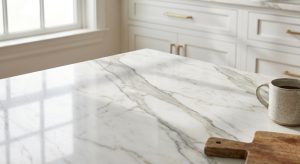
A key advantage of choosing quartz, specifically, is its broad range of colors, patterns, and textures. You can mimic the elegant veining of marble, opt for subtle textures that complement a neutral color scheme, or go bold with a dark, dramatic shade. Whether you or a loved one want a calm environment or an eye-catching statement piece, the versatility of quartz offers abundant design possibilities that can be customized to reflect your personal style.
Compare materials for a waterfall
When planning a waterfall countertop, you might weigh a number of material options, including quartz, marble, granite, and other solid surfaces. Each option delivers a unique look and set of characteristics. Understanding these differences helps you choose what best aligns with your priorities, whether you value minimal maintenance or a specific style.
- Quartz: Engineered for durability, quartz is non-porous and highly resistant to stains, scratches, and chips. It comes in a variety of hues and patterns, ranging from subtle neutrals to bold marbled veining.
- Marble: Prized for its natural veining and timeless beauty, marble can create a luxurious atmosphere. It is, however, more porous, making it susceptible to etching and staining if not carefully maintained. For design inspiration, you might want to see how waterfall countertop marble elegance can offer classic appeal.
- Granite: Known for its natural variation, granite can be a great choice for those who appreciate organic patterns. With proper sealing, granite can resist stains and scratches, though it requires more attention than some engineered options. Read about granite waterfall stain resistance to learn more.
- Solid surfaces: Made from resins and minerals, solid-surface materials seamlessly combine style and practicality. While not as heat-resistant as quartz or granite, they offer smooth integration with sinks and backsplashes.
Each of these materials can create a stunning waterfall effect, but they do require different levels of care. If you prefer a lower-maintenance approach with robust daily performance, quartz often stands out for combining surface resilience with a multitude of design options.
Evaluate cost and budget factors
Any major remodeling project calls for close attention to budget, so exploring overall costs for a waterfall design is essential. Quartz slabs, for instance, tend to be priced between $40 and $100 (or more) per square foot, as noted in reputable sources like CaesarstoneUS. Once fabrication and installation are factored in, the price can climb higher. Waterfall installations usually involve additional precision cutting for mitered edges, plus the vertical sections that require extra material. According to external data, fabrication expenses can reach $2,000 or more depending on the complexity of the design.
Labor costs vary by region and by the fabricator’s expertise. Some localities can add supplemental fees of up to $75 per linear foot for the mitered edges. If you want to explore more specific numbers, see our breakdown of the cost of waterfall countertop per square foot, which can help guide you in planning a realistic budget.
You might wonder if the eye-catching effect is worth the upcharge. In most cases, investing in a waterfall layout brings long-term value, given the enhanced durability and timeless appeal. However, if budget constraints are tight, scaling down to a smaller island or choosing a less expensive stone can still allow you to capture the unique waterfall flair. The key is to understand exactly what you can afford while balancing aesthetic goals with functional requirements.
Appreciate the design benefits
A major draw of waterfall countertops lies in their dramatic lines. By wrapping the same material over the edges and down to the floor, you create a continuous flow that visually extends the horizontal surface. This design effect can appear both modern and luxurious, featuring sleek planes that make the room feel more expansive.
According to Architectural Digest, waterfall edges can work with a range of materials, but they are often best suited to contemporary or modern spaces. Nonetheless, there is no hard rule that they must exclusively go in minimalist homes. In fact, certain patterns in granite, marble, or quartz can reconcile well with transitional or eclectic styles, especially when complemented by thoughtful décor and fixtures.
In an open-concept home, a waterfall island can become a striking display that catches the eye from multiple vantage points. MSI Surfaces highlights that the waterfall design may even function as an art piece in the room, putting the chosen stone on full display. Whether you prefer bright whites, dramatic blacks, or something with subtle veining that coordinates with your floors and cabinetry, a waterfall approach lets you show off the flow of color and pattern in ways a traditional countertop cannot.
Improve durability and functionality
A waterfall configuration is not just a style statement, it also provides added strength and protection. By covering the side panels, you shield cabinets from the scratches that come with daily foot traffic, vacuuming, or accidental bumps. In addition, quartz excels at durability, thanks to its engineered composition that effectively resists cracking and chipping during routine cooking, cleaning, and entertaining.
Besides its protective benefit, quartz’s non-porous surface helps it stand up to spills and stains. Frequent tasks in a busy kitchen—cutting vegetables, setting down hot pans, or clearing liquids—become less stressful because the material is robust enough to handle them. If you want to focus on how quartz holds up under pressure, consult waterfall countertop quartz durability for more insights.
Functionally, the generous overhang characteristic of many waterfall islands can also provide additional seating or workspace. In a family home or a place where you frequently entertain, extra seating along a waterfall edge can be practical and inviting. This arrangement allows friends, family members, or guests to gather in a casual setting while you cook or socialize.
Plan for installation and support
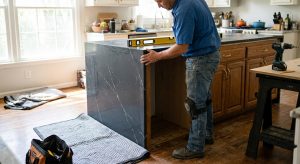
Despite their striking appearance, waterfall countertops can be more complex to install than standard countertops. Professionals often use specialized equipment like CNC laser cutters to achieve flawless seams where the horizontal surface meets the descending panel. As Architectural Digest points out, ensuring perfect alignment and pattern matching (especially in quartz or materials with noticeable veining) is a job suited for experienced fabricators.
It is critical for you or a loved one to think about the structural support beneath the waterfall panel. Reinforcements—such as steel brackets or plywood backing—help secure the vertical slab. Make sure the underlying cabinetry and subfloor are sturdy enough to hold the additional weight. You can learn more about weight requirements and framework by visiting waterfall countertop support requirements.
Below is a general outline for a professional waterfall installation:
- Measure the space precisely.
- Template the existing layout to ensure an accurate fit.
- Choose a slab that suits your color and pattern preferences.
- Cut the slab using a precise miter saw or CNC technology.
- Assemble and epoxy-seal the standard horizontal piece with the cascading edge piece.
- Polish and finish any seams or exposed corners.
- Secure the new countertop, ensuring the base cabinets and subfloor can handle the weight.
A DIY approach is probably not ideal for most people. Any slip in cutting the slab can lead to visible seams, mismatched veining, and compromised integrity. If you want extra guidance, you could visit waterfall countertop professional installation to find tips for selecting an experienced contractor you can trust.
Maintain a pristine waterfall countertop
Once you have invested in a new waterfall installation, you will want to preserve its look and integrity over the long haul. Thankfully, quartz is relatively low-maintenance. Since it is non-porous, you do not need to seal it, unlike natural stones such as marble or granite. Regular wiping with a mild soap-and-water solution should suffice for day-to-day cleaning.
For deeper upkeep, you might occasionally use pH-neutral surfactants formulated for stone surfaces. Steer clear of abrasive scrubbers or harsh chemicals, which can dull the appearance. If you spill something acidic—like tomato sauce or lemon juice—wipe it up promptly to prevent lingering discoloration. For more suggestions, check out waterfall countertop maintenance tips, where we go into depth on cleaning methods and products.
Here are some quick tips to safeguard your investment:
- Use cutting boards: Even though quartz resists scratches, prolonged knife contact can eventually leave subtle marks.
- Place trivets under hot pans: Quartz is heat resistant, but excessive temperatures can cause thermal shock over time.
- Blot spills immediately: Although quartz is stain-resistant, certain substances might leave marks if allowed to sit.
- Buff gently, if needed: Mild polishes designed for engineered stone can sometimes restore extra shine.
With the right care, quartz can maintain its original brilliance for years, ensuring you get the most out of your waterfall countertop.
Explore custom design possibilities
The concept of a waterfall countertop is not limited to kitchen islands. Homeowners have started applying similar ideas to bathroom vanities, desks, bar tops, or even entertainment consoles. The same “cascade” method can elegantly conceal storage compartments or unify open layouts like lofts and large multipurpose rooms.
Sources like MSI Surfaces show that waterfall edges can integrate beautifully in both small and large spaces. For a smaller layout, a waterfall edge can create an illusion of depth and dimension. In a larger room, it can emphasize symmetry and frame the area for casual seating.
Depending on your ambitions, you might go for pure minimalism with a crisp white quartz waterfall or aim for a bold statement by choosing a high-contrast vein pattern. If you prefer a dramatic twist, you could opt for a heavily veined marble or quartzite slab for the vertical plane, turning the edge into a genuine showpiece. Should you decide to see popular styles shaping this trend, browse our overview of waterfall countertop design trends to spark a few creative ideas.
A waterfall approach also merges well with “continuity” designs, including matching backsplashes or accent walls. By making the countertop “roll” seamlessly into additional surfaces, you create a fluid aesthetic that pulls the entire room together. In a bathroom, for example, a quartz waterfall vanity could pair with a vertical quartz backsplash for a sleek, unified look that underscores modern sensibilities.
Five frequently asked questions
-
How much does a quartz waterfall design typically cost?
The price depends on factors like the size of your island, the complexity of the seams, and the specific quartz type you choose. Slabs might cost $40 to $100+ per square foot. You also have to factor in fabrication and labor fees, which can add significantly to your overall investment. -
Will a waterfall countertop clash with a traditional kitchen design?
While waterfall edges are often associated with modern or contemporary styles, they do not necessarily clash with traditional kitchens. Selecting a subtler color or gentler pattern can help the countertop blend with your existing design elements. -
What is the difference between a flush countertop and a waterfall countertop?
A flush countertop is simply level with the cabinetry or extends slightly over the edge in a typical horizontal layout. A waterfall countertop extends down the sides, so the material gracefully “cascades” toward the floor. Learn more at waterfall vs flush countertop design. -
Can I install a waterfall countertop myself?
Most experts agree that a waterfall installation is not an ideal DIY project. Precision cutting, pattern alignment, and heavy slab manipulation demand specialized tools and ample experience. If you want to explore do-it-yourself aspects further, see waterfall countertop diy considerations. -
How do I choose between quartz, marble, or granite for a waterfall edge?
Consider both function and style. Quartz is known for durability and easy care; marble offers timeless elegance; granite brings natural variation and a robust feel. Whichever you pick, make sure to weigh factors such as maintenance, cost, and color options.
Bringing it all together
Opting for a waterfall countertop can genuinely transform your space, turning an ordinary kitchen or bathroom into a cohesive, visually striking environment. You or a loved one can embrace this style in any setting that seeks a premium look, from sleek condos with contemporary flair to suburban homes yearning for modern updates. Even if your décor leans slightly traditional, nuanced material choices can help the waterfall integrate seamlessly into your design scheme.
As you weigh quartz against alternatives like marble, granite, or other solid surfaces, remember that each material offers unique benefits. But quartz stands out for its durability, impressive range of design options, and straightforward maintenance routine, which might be particularly valuable for active households. Whether you favor subtle neutrals or bold, marbled veining, quartz can capture the depth and dimension you want while maintaining structural integrity.
If you are ready to jump into the finer details, consider consulting reputable fabricators who specialize in waterfall edges and tailor the experience to your needs. A skilled professional ensures your slab is cut precisely, your veining or intricate patterns match perfectly, and the entire structure is supported and stable. The result is a statement piece that elevates not only your counters but your entire living space. For more resources on everything from cost analysis to the latest trends, feel free to explore related topics like waterfall countertop pros and cons, waterfall countertop installation risks, or waterfall countertop space planning.
By choosing a waterfall design, you can showcase the beauty of your stone, protect surrounding cabinets from damage, and effortlessly blend function with visual allure. From the daily bustle of family life to special gatherings and celebrations, your quartz waterfall countertop is poised to shine for years to come. Let it be the supportive centerpiece that brings together style, strength, and a uniquely inviting atmosphere.