Understand stone waterfall islands
If you have been looking for a dramatic way to transform your kitchen, a stone waterfall kitchen island offers an eye-catching design that pairs functionality with aesthetic appeal. This unique style ensures that the countertop material flows seamlessly from the flat surface at the top down the sides of your island, echoing the cascading effect of a waterfall. By choosing a stone waterfall design, you are not only investing in a striking focal point for your kitchen, but also in a durable fixture that can potentially enhance your home’s long-term value.
In today’s market of premium countertops, you have many stone options to choose from, including quartz, marble, granite, and even quartzite. Each type of stone comes with distinct qualities that affect cost, maintenance, and style. While engineered quartz remains a top choice due to its seamless veining and minimal upkeep, many individuals find granite’s natural patterns and marble’s luxurious look equally appealing. Whichever stone you select, a waterfall installation can elevate your kitchen by offering a modern, sophisticated statement.
Definition and cascading design
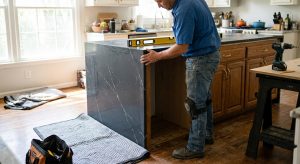
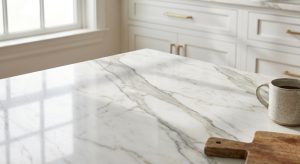
With a waterfall island, the countertop material extends vertically down one or both ends of your island. This contrasts with a traditional countertop edge that stops at the perimeter of the island’s work surface. Often, a waterfall island uses a mitered edge joint where the horizontal slab meets the vertical piece at a fresh, nearly invisible seam. This detail gives the illusion of a continuous flow, akin to water dropping over a ledge.
- Visual continuity: Because the stone pieces match in thickness and pattern, the waterfall design produces an uninterrupted flow.
- Protection: The side panels shield the cabinet framework from dents or scratches.
- Strong presence: Waterfall sides draw attention, making the countertop the room’s centerpiece.
Why the waterfall style stands out
Adopting a stone waterfall design not only showcases the elegance of your chosen material, but also creates an artistic statement in modern or contemporary interiors. This style especially shines in open-plan living spaces, lofts, or large kitchens where clean lines and sleek surfaces are emphasized. In a smaller layout, a single-sided waterfall can give you the visual impact you desire without overwhelming the space.
Compare popular stone materials
Deciding on the right material for your waterfall project is crucial to ensuring a balance between aesthetics, functionality, and budget. Each type of stone—quartz, marble, granite, and quartzite—offers advantages that suit different design preferences and lifestyle needs.
Quartz
Often engineered for resilience, quartz offers versatility, low maintenance, and a seamless appearance. You can choose different finishes and patterns that resemble marble or granite, or go for a monochromatic look. According to sources such as Caesarstone US, quartz waterfall countertops:
- Are nonporous, meaning they resist staining and rarely require sealing
- Can withstand heat and scratches in typical cooking scenarios
- Offer cohesive veining or uniform color
- Usually cost between $40 and $100 per square foot for the stone, with installation adding up to $100 per square foot
If you prefer minimal upkeep, a waterfall quartz countertop installation may be your ideal choice, because no resealing is usually required.
Marble
Marble conveys luxury and timeless elegance. Its natural veining and refined finish make it a popular pick for high-end kitchens. However, marble is more porous than quartz and prone to etching or staining if not sealed and maintained correctly. Many homeowners still prioritize marble’s beauty. Depending on your cooking habits and sensitivity to potential imperfections, you might love how marble ages or prefer a more resistant stone.
If you lean toward marble’s sophisticated look, waterfall marble countertops might be right for you. Keep in mind that marble may need periodic resealing to remain at peak appearance.
Granite
Granite is a classic, durable favorite. Each slab of granite has distinct patterns and a wide range of color variations. When you choose a waterfall island in granite, you get an organic style that stands out. According to MKD Kitchen & Bath, top granite selections for waterfall islands include:
- Whisper White
- Valle Nevado
- Venice Cream
- Agatha Black
- Black Galaxy
The natural veining or speckling in these stones can accentuate the waterfall’s dramatic effect. However, granite often needs resealing at least once a year—or possibly twice, depending on usage—incurring costs between $200 and $1,200 each time (Caesarstone US). If you commit to that maintenance schedule, a waterfall granite countertop installation can be a long-lasting choice for your kitchen.
Quartzite
Quartzite is a naturally formed metamorphic rock, known for its toughness and striking patterns. Similar to granite, quartzite requires sealing to maintain its finish. It often features soft swirling veins or dramatic streaks, working well in both traditional and contemporary designs. With a waterfall quartzite countertops project, you can achieve a show-stopping look while enjoying relatively strong resistance to wear and tear.
Weigh benefits and drawbacks
A waterfall island can look unquestionably stunning, but it is important to consider both advantages and potential limitations before making your choice.
Benefits
- Aesthetics: The cascading effect of matching stone can be visually compelling and immediately draw the eye.
- Durability: Covering the sides of your island with a sturdy surface helps protect cabinet bases and corners from scuffs.
- Increased home value: A modern upgrade can attract potential buyers looking for a standout feature in the kitchen.
- Versatility: This style is adaptable, whether it is double-sided, single-sided, or extended with an overhang for seating.
- Low maintenance (with quartz): When you choose quartz, you avoid frequent resealing and get a surface that resists staining.
Potential drawbacks
- Cost: You effectively double the amount of stone needed, causing material and fabrication costs to climb. Installation can also be more labor-intensive, possibly doubling the expense of a standard countertop.
- Style constraints: Waterfall designs complement modern and contemporary themes best. If your home is more traditional, it may feel out of place.
- Seating limitations: The cascading ends can take up extra floor space, reducing the underside area where bar stools might fit.
- Maintenance for marble or granite: If you opt for marble or granite, expect additional ongoing care to keep the surface sealed, free of stains, or properly polished.
Explore key design tips
Adding a stone waterfall kitchen island involves more than mere aesthetics. You also want a layout that works with your cooking habits, daily traffic, and social needs. Here are some tips to ensure your new fixture resonates with your personal style and functional objectives.
Plan for overhang and seating
One of the best ways to increase functionality is by incorporating an overhang. This extension can provide additional counter space for meal prep, casual dining, or social gatherings. If you plan to tuck stools or chairs under the waterfall side, confirm there is enough support. According to Architectural Digest, sturdy materials such as quartz and proper reinforcement are essential to safely accommodate an overhang.
Coordinate with cabinetry and flooring
For a cohesive look, consider how the island’s color and finish will match or contrast with your cabinets and flooring. A lighter stone can brighten a darker interior, while dark granite or quartz can ground a lighter space. Sometimes, you may highlight veins that echo accent colors in backsplashes or cabinet hardware.
Mind thickness and edges
Common countertop thickness is 2 to 3 inches, and alignment of thickness on top and side slabs is crucial to maintain a flawless appearance (Caesarstone US). Edges should be mitered precisely for a seamless joint, which calls for expert fabrication. You can also experiment with an eased edge or a slightly beveled edge if you want a softer look. If you are aiming for a perfect, almost invisible seam, a seamless waterfall countertop installation helps you achieve that sculpted, monolithic look.
Incorporate hidden storage
If you plan your waterfall island carefully, you can incorporate concealed storage or even discreet electrical outlets. The descending sides allow you to hide the functional aspects of the kitchen, such as appliances or small compartments for utensils and tools (Architectural Digest). Depending on the structure, you can also integrate open shelving on the non-waterfall side for easy access to everyday items.
Learn about installation steps
Installing a stone waterfall island is typically more complex than installing a standard countertop, so it is critical to work with specialists experienced in custom fabrication and precise measurement.
1. Consultation and design
Every project should start with a thorough conversation about materials, budget, and layout. Connecting with waterfall countertop project consultation experts can help you refine your ideas and determine your specific goals. This stage often involves sketches, mood boards, or digital renderings.
2. Material selection
Next, you must choose from quartz, marble, granite, or quartzite, depending on your taste and practical needs. A waterfall countertop material selection service can guide you through color palettes, sample slabs, and pattern alignment discussions. This ensures that the design flows as intended once the slabs are installed.
3. Measurement and templating
Precise measurements are essential for a perfect fit. A few millimeters off can ruin the seamless look. Services like waterfall countertop measurement service and waterfall countertop templating employ lasers or custom templates to map out the exact shape of your island, including corners and edges.
4. Custom fabrication
After confirming measurements, the slab is cut to size. A high level of craftsmanship and potentially CNC (computer numerical control) cutting is required to produce accurate angles. Some projects might involve a custom waterfall countertop fabrication approach that handles everything from edging to polishing. This step can take anywhere from a few days to a couple of weeks, depending on complexity.
5. Edge mitering and finishing
The distinctive “waterfall” effect occurs when the stone transitions from horizontal to vertical. To achieve this, specialists use mitered edges. You may prefer a clean 90-degree cut or a slight bevel if you want a more rounded corner. For professional guidance, waterfall countertop edge mitering ensures crisp seams for a virtually invisible joint.
6. Installation and alignment
Once fabrication is complete, installation day arrives. The waterfall panel or panels are carefully transported, placed, and secured to the cabinet base. Cohesive alignment is key, ensuring that your materials meet seamlessly. During this critical stage, an expert waterfall countertop installation professional double-checks everything from levelness to miter joints, then removes any excess adhesives for a immaculate finish.
7. Sealing and care
If you choose granite or marble, it is advisable to seal the surface upon installation to maintain its luster and durability. Over time, you may need a waterfall countertop sealing service to keep the surface protected from liquid absorption. Quartz, in contrast, is nonporous and does not require sealing, although regular cleaning with mild soap and water is recommended. Whichever material you choose, do not neglect routine care for long-lasting beauty.
Factor in cost and maintenance
A waterfall design costs more than a standard countertop because of increased material requirements and specialized labor. You must account for slab prices, fabrication costs, and installation fees. Expect stone to range from $40 to $100 per square foot, and installation up to $100 per square foot, plus any extra fees for CNC laser cutting (Caesarstone US).
If you want a personalized quote to plan your budget more precisely, a waterfall countertop cost estimate can provide details. From there, you can compare the cost of quartz, marble, granite, or quartzite. Keep in mind that materials like granite or marble may push your budget higher if you include ongoing resealing. While that can be a deterrent for cost-conscious homeowners, the organic and luxurious aspects may be worth it for you.
Enhance your space with added utility
One of the benefits of a waterfall island is how it can merge elegance with practicality.
- Breakfast bar: Extend one side of the countertop to create a dining spot. Position stools or chairs beneath the overhang, turning your island into a social center.
- Storage solutions: Install cabinets and drawers on the interior side to keep cooking supplies close at hand. The waterfall panel helps hide them, preserving the island’s sleek exterior.
- Lighting: Draw attention to the waterfall effect by installing pendant lights or under-counter LED strips. This highlights the texture and pattern of your chosen stone, especially in evening settings.
- Integrated appliances: You can hide mini-fridges, microwaves, or warming drawers within your island. The stone sides shield these functional workhorses while preserving the overall design’s continuity.
Should you decide to extend this concept to other areas, think about a waterfall bathroom vanity waterfall or a similar design in a bar area. Consistent designs across your home can generate a cohesive, contemporary look.
Maintain and refinish for longevity
Regular care keeps your waterfall island looking as remarkable as the day it was installed.
Daily cleaning
- Use nonabrasive cleaners or mild soap and water
- Wipe spills immediately to avoid staining, particularly on marble or granite
- Avoid harsh chemicals that might dull the finish
Periodic sealing
If you have chosen a porous material like marble or granite, schedule a reseal once or twice a year, or as soon as you notice water absorbing into the surface. The cost could be $200+ each time (Caesarstone US). A waterfall countertop care maintenance visit can handle sealing and polishing for you, making sure the surface remains resilient.
Refinishing and repairs
Over time, general wear or minor damage might require professional attention. Whether your countertop is chipped at the edge or needs full-scale resurfacing, a waterfall countertop refinishing service can rejuvenate its appearance and correct small imperfections. Even quartz might need a polish or buff, although it tends to be more scratch-resistant than other stones.
Navigate unique project scenarios
Every kitchen configuration varies—some have minimal space, others have large open layouts, and some homeowners want a double-sided waterfall. You might also consider pairing a waterfall countertop with a matching backsplash, or using contrasting materials for visual interest.
- Compact kitchens: You can choose a single waterfall side facing outward and keep the other side open for bar seating or additional cabinets.
- Double waterfall: If you have ample room, let the countertop cascade on both sides. This symmetrical approach creates a bold, architectural statement (Cut 2 Size).
- Overhang expansions: Extend the slab on one or both sides to provide more space for dining. A kitchen waterfall countertop upgrade can often include reinforcement to support bar seating.
- Hidden compartments: Use the extended stone panels to conceal electrical outlets or formatting for additional appliances, giving a clutter-free look.
For major overhauls, you might look into a waterfall countertop remodeling approach to completely redefine your island. If you need to replace a wet bar or older island, consider a waterfall countertop replacement service to capture the fresh look of a cascading stone design.
Establish your partner in the industry
When you are selecting a fabrication or installation partner, experience and specialization matter. A waterfall countertop contractor near me can guide you through local requirements, while waterfall countertop specialists might manage your entire project from concept to final walk-through. Their expertise and track record with quality assurance reduce the risk of miscalculation or mismatch. For total peace of mind, you can also rely on a waterfall countertop quality assurance guarantee to confirm that each step meets the highest standards.
Commercial settings such as restaurants or modern retail spaces see advantages in a commercial waterfall countertop installation as well. The statement piece draws customers’ eyes and can elevate the brand’s image. In residential spaces, a residential waterfall countertop installation remains an excellent choice if you want a contemporary highlight that merges beauty and durability.
Plan your timeline and next steps
Creating a stone waterfall kitchen island can be time-intensive because of the specialized fabrication involved. You might want to consider a waterfall countertop timeline management approach, which organizes all steps—from measurement to final inspection—so that your installation meets deadlines with minimal disruption.
At this point, you could schedule an in-person site evaluation or a digital consultation to discuss your project scope. An initial conversation often addresses budget, color selection, potential challenges (like corners or angled walls), and projected installation dates. Some homeowners choose to do partial upgrades, opting to install a new stone top while keeping their existing cabinets, though you may need adjustments for perfect alignment. Whether it is your first time tackling a waterfall design or you have experience with custom countertops, a waterfall countertop project consultation can help you move forward confidently.
5 frequently asked questions about waterfall countertops
-
Will a waterfall design fit a traditional kitchen style?
Waterfall countertops lean toward modern or contemporary aesthetics. While you could blend them into a transitional style kitchen with carefully chosen materials and complementary finishes, they might seem out of place in a purely traditional environment that emphasizes classic molding and ornate details. -
Which stone is easiest to maintain in a waterfall installation?
Quartz is typically easiest to maintain because it is nonporous, does not require sealing, and resists scratches. Marble and granite offer natural beauty, but they need periodic resealing and can be more susceptible to stains or acid etching. -
What is the typical cost range for a stone waterfall kitchen island?
Expect slabs to cost between $40 and $100 (or more) per square foot. Installation can add up to $100 per square foot. You will likely pay extra for precision mitering and CNC cutting that creates the seamless waterfall look. In many cases, the total cost can be double that of a standard countertop. -
How can I ensure the seams look invisible?
Skilled mitering is key. A precise cut at a 45-degree angle along the top and side slabs can yield seamless joins. Working with specialists familiar with waterfall countertop edge mitering can help hide any visible lines, especially if you opt for stone with subtle veining. -
Does a waterfall countertop always cover both sides of the island?
No, many homeowners choose a single waterfall side. This approach works well for smaller spaces or if you want to leave one side open for bar seating. Double waterfalls are more common in spacious kitchens or if you prefer a symmetrical look.
Concluding thoughts
A stone waterfall kitchen island can be the centerpiece that defines your entire cooking and dining area. By carefully selecting materials, finalizing an overhang for seating, and ensuring precision installation, you create a functional piece of art that enhances your home’s aesthetic. Whether you favor quartz for its minimal upkeep, granite for its bold patterns, or marble for its timeless elegance, the result is a sleek, modern edge that can offer both protection and a distinct focal point.
Taking the time to plan out each step—from waterfall countertop measurement service to final sealing—will help ensure that your project suits your vision. If you are ready to transform your space, explore a waterfall countertop project consultation. With this eye-catching style, you can integrate beauty, durability, and value into your kitchen for years to come.