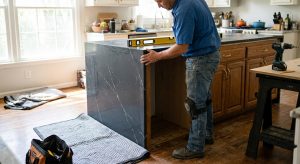
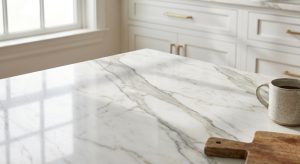
When you search for a waterfall countertop contractor near you, you might already feel that spark of excitement envisioning a striking kitchen or bathroom design. Waterfall countertops wrap down the sides of an island, vanity, or counter in a continuous flow, lending an elegant, modern flair to any space. When crafted from high-quality materials such as quartz, granite, or marble, waterfall edges can transform an ordinary surface into a functional showpiece—one that merges beauty and practicality. In this guide, you will discover why waterfall countertops have become favorites among homeowners seeking premium stone fabrication. You will also learn about the benefits, installation timelines, cost considerations, and key steps to keep in mind so that your project proceeds smoothly.
Whether you are renovating your kitchen and adding a large statement island, or remodeling a bathroom vanity with a sleek side panel, a waterfall countertop can provide a seamless transition from horizontal to vertical surfaces. This design choice is not only visually striking, it also fortifies your cabinets, protects them from wear, and keeps the overall look cohesive. Additionally, waterfall edges can tuck away functional elements—such as outlets, cabinets, or built-in appliances—beneath a veil of luxury. By understanding the process, choosing your materials wisely, and partnering with an experienced contractor, you will enjoy a polished result that stands the test of time.
Discover waterfall countertops
Defining the waterfall concept
A waterfall countertop typically extends from the top surface of your counter down one or both sides, creating an uninterrupted “waterfall” effect. Instead of a traditional overhang that stops at the edge of your counter, the surface material wraps around, offering both aesthetic and protective benefits. Many homeowners favor this design for its clean lines, seamless edges, and ability to give a modern twist to their kitchens or bathrooms.
From a functionality standpoint, waterfall countertops guard the sides of your cabinetry against scrapes and dents. This is particularly helpful in high-traffic zones, where people might brush against corners or where bar stools frequently slide in and out. Moreover, a waterfall edge can elevate even a modest space by acting as a statement piece that draws the eye.
Why it appeals to many homeowners
The appeal of waterfall designs stems from their fusion of art and utility. Contemporary kitchens and bathrooms often emphasize minimalism. A waterfall edge supports that sense of sleekness by eliminating abrupt edges, exposing a uniform slab of stone, and highlighting the natural beauty of materials like marble or granite. The result is a space that appears elegantly cohesive.
In addition, waterfall countertops blend well with open-concept areas, since they can stand out as sculptural focal points. If you enjoy hosting gatherings, the extended edge of a waterfall design can also create a casual bar or seating area, allowing family and friends to gather comfortably. Ultimately, whether you are seeking an eye-catching conversation piece or you prefer an understated but refined style, a waterfall top can adapt to your preferences.
Recognize the advantages
Protecting corners and surfaces
Traditional countertops leave open edges at the corners, which can accumulate scuffs and chips over time. By extending the same material down the sides, a waterfall design adds a protective barrier that is both durable and easier to wipe down. Materials like quartz and granite, which rate high on hardness and resistance, ensure that day-to-day bumps no longer translate to visible damage.
In homes featuring children or pets, having sturdier edges can be a genuine advantage. You can let kids pull up chairs for a quick meal without worrying as much about damaging the corner of the counter. Meanwhile, if you have a pet that likes to scamper around or rub against corners, a waterfall edge can handle the daily friction better than laminate surfaces or unfinished edges.
Enhancing visual flow
A key component of modern design is unity—how each element of a room transitions seamlessly into the next. Waterfall countertops excel at creating that cohesion. Instead of a sharp halt to the counter’s surface, you see a graceful continuation of the same material into a vertical plane. The continuity feels both luxurious and welcoming, anchoring your design in a smooth, uninterrupted flow.
When coupled with new cabinetry, these dramatic edges can accentuate features such as under-counter lighting or hidden storage. The continuous material also pairs nicely with transitional or contemporary styles. However, if you have a rustic kitchen filled with distressed wood and ornate finishes, a straight waterfall edge might not fit as organically. According to Sanford Granite, the crisp lines of a waterfall suit modern or transitional schemes best, ensuring you can match your countertop to your broader design goals.
Understand the materials
Quartz, granite, marble, and more
You have multiple stone options when it comes to waterfall counters:
-
Quartz: Engineered quartz is a popular choice for its non-porous nature, resistance to staining, and relatively low upkeep. It can replicate natural stone patterns or even present solid hues unachievable by natural surfaces. When installed as a waterfall edge, quartz can create a polished, modern effect. If you are considering a quartz option, you might research waterfall quartz countertop installation for deeper insights into the pros, cons, and best maintenance practices.
-
Granite: With rich natural veining and unique color variations, granite offers a distinctive look that stands out. While granite is extremely durable, it usually requires periodic sealing to preserve its appearance. If you love the natural patterns of stone and want a waterfall edge, you could look into waterfall granite countertop installation to ensure you get the right balance of style and durability.
-
Marble: Marble exudes timeless beauty and can make your waterfall countertop the focal point of any kitchen or bathroom. However, marble is more porous and prone to etching. You may benefit from specialized sealing or a slightly thicker slab. If marble’s luxury appeals to you, consider reading about waterfall marble countertops for more on preserving that polished finish.
-
Other materials: If you are open to alternatives, you might opt for quartzite, wood, concrete, or even steel. Each offers unique visual and practical benefits. For instance, waterfall quartzite countertops marry the natural beauty of quartzite with a durable composition suitable for high-traffic kitchens.
Every material has nuances regarding stain resistance, sealing processes, and color consistency. Before finalizing your choice, weigh how each will fit into your lifestyle, budget, and design aspirations. If you prefer minimal upkeep, you can lean toward quartz or quartzite. If you love organic, one-of-a-kind patterns, granite or marble may be your perfect match.
Matching design preferences
When you begin your waterfall countertop material selection, you will discover that each stone type offers a range of color palettes, patterns, and finishes. You might opt for a bold, veined marble to highlight the waterfall edge, or keep it subtle with a neutral quartz. The beauty of this design is how easily you can tailor it to your space, from bright white counters in a sleek, minimalist penthouse to an earthy granite in a cozy suburban kitchen.
Balance is crucial too. From the flooring to the backsplash, your countertop should integrate seamlessly, not overpower the entire room. Using a consistent material or complementary color scheme can enrich visual harmony. If you are unsure about the best color or texture, scheduling a waterfall countertop project consultation might offer practical guidance. Some fabrication companies even provide digital mock-ups or samples to help you see the stone in your environment.
Evaluate cost factors
Material and complexity
According to Angi, installing countertops typically costs around $3,105 on average, but prices may fluctuate depending on the stone type, labor rates, and edging. Waterfall designs generally cost more than classic countertops, because you need additional slabs or panels for the wraparound sides. If you select a rare or high-end stone, that cost increases. For instance, premium marble slabs will likely elevate your budget.
Additionally, the shape and complexity of your countertop can influence the final tally. Some kitchens or bathrooms have angled islands, curved edges, or integrated sinks that require extra customization. If you want a double waterfall (wrapping both ends of an island) or an intricate cut that carefully aligns stone veining, you may see a higher bill. For a more precise figure, you can request a waterfall countertop cost estimate from a trusted professional in your area.
Skilled fabrication and installation
Crafting a seamless waterfall countertop relies on meticulous matching of the stone’s veining or grain as it transitions from horizontal to vertical. This process demands:
- Exact measurements: A professional waterfall countertop measurement service helps ensure panels fit perfectly.
- Precise templating: During waterfall countertop templating, experts capture angles and dimensions to design a flawless extension of your base slab.
- Specialized cutting and mitering: Waterfall countertop edge mitering involves cutting edges at specific angles (often 45 degrees) so they blend together without visible seams. This step is crucial to maintaining the “flow” of the design.
Obtaining a crisp corner or an “inverted U” effect typically requires more labor than standard installations, leading to higher labor costs. For a high-end look, it is important to rely on an experienced contractor who can confidently handle custom waterfall countertop fabrication. The final product can be a true masterpiece, given the right care and skill.
Plan for installation details
Typical timeline management
Based on data from Integrity Stonework and other industry experts, most standard countertop installations range from four to eight hours. However, the timeline for waterfall counters can be slightly longer because of extra mitering, aligning patterns, and applying finishing touches. If you are undertaking a full kitchen remodel, the process typically follows these general steps:
- Cabinet installation and leveling
- Initial consultations to discuss design, budget, and timeline
- Final selection and ordering of materials
- Waterfall countertop templating with precise measurements
- Stone fabrication, edging, polishing, sealing
- Seamless waterfall countertop installation
- Waterfall countertop care maintenance and final inspection
Allow extra time if you want custom backsplashes or integrated features like sink cutouts or appliance stations. Large-scale projects can also include adding a stone waterfall kitchen island that needs specialized reinforcement. Planning carefully can prevent unnecessary delays, making sure your kitchen or bathroom is ready exactly when you need it.
Preparing your space
Before any stone arrives, you will want to ensure cabinets are properly leveled, appliances are on site (or at least accounted for), and the path to the installation area is clear. Additionally, any old countertops must be removed, a phase that can create dust and debris. Confirm with your contractor how to protect nearby surfaces and floors.
During the job, precise alignment is a priority. When the stone slab is large, expert providers often measure doorways, corners, and hallways to ensure that they can move the piece into place without having to cut it into multiple segments. If your layout forces them to slice the slab, you may end up with a seam. While a good team can position seams so they are nearly invisible, it is practical to plan for potential breaks. Because waterfall edges have to match patterns exactly, a carefully installed seam can still look stunning. If timing is a concern, you can consult a waterfall countertop timeline management expert to set clear expectations.
Select the right contractor
Checking references and expertise
Finding the right professional goes beyond a simple online search. You want a contractor or stone fabricator who is experienced in the unique challenges of waterfall countertop remodeling. An experienced team will coordinate your design from the measurement stage to the final polish, ensuring everything lines up seamlessly. If you see a portfolio displaying projects with well-aligned veining and crisp edges, you can be more confident about the outcome.
Ask about their typical fabrication process, how they address corners, and whether they offer a waterfall countertop sealing service. Extra steps like sealing, polishing, or waterfall countertop refinishing service may help preserve your slab for years. Also, confirm they use quality adhesives and epoxies that prevent discoloration or separation in the future.
Embracing a personalized approach
Every home is unique, and part of the beauty of waterfall countertops is their ability to adapt to your personal vision. Look for a contractor who values collaboration and schedules a thorough waterfall countertop project consultation. You want someone who listens attentively to what you appreciate most, whether that is bold veining, integrated storage, or a subtle edge profile.
This empathy and adaptability reflect a supportive environment that encourages you to share personal preferences without feeling rushed. You might have specific concerns such as wanting a strong overhang to accommodate bar stools, or ensuring that certain appliances fit seamlessly under the counter. A reliable partner will not only confirm the feasibility of your ideas but also offer constructive suggestions based on experience. Ideally, you will reach a solution that is both practical and beautifully suited to your lifestyle.
Consider unique applications
Bathroom vanities and commercial spaces
Although waterfall countertops are most often associated with kitchen islands, you can also embrace them in other areas of your home or business. A waterfall vanity countertop installation in a bathroom can create a comforting sense of continuity and hide the vanity’s plumbing lines behind a graceful stone waterfall. Likewise, commercial waterfall countertop installation can dress up high-traffic office gathering areas or upscale hotel lobbies. It is a polished, modern statement that resonates across many design contexts.
Outdoor kitchens
If you have an outdoor cooking or entertaining space, a well-chosen waterfall countertop could unify your exterior design. Materials like quartz or certain granites withstand the elements better, although you might need extra sealing or coverage to protect the slab from sunlight and weather changes. Regardless, including a waterfall edge outdoors can bring a sense of cohesion, turning your alfresco setup into an elevated retreat.
Maintain your waterfall countertop
Best care practices
Caring for a waterfall countertop differs little from maintaining a standard slab, but you now have a vertical surface to keep clean. Gently wipe spills with a damp, soft cloth, and use mild cleaners that suit your stone type. Because prolonged contact with acidic substances can damage surfaces such as marble, you will want to remove any spills promptly. Sealing is a crucial step for porous stones. If your chosen stone is sensitive to stains or etching, discuss a maintenance schedule with a specialist or request a waterfall countertop care maintenance plan.
With quartz, you can reduce the need for frequent sealing. However, bright or bold surfaces may still show smudges more easily, so a habit of quick wipe-downs keeps things looking pristine. For granite or marble, regular inspection of the seal—especially in corners and along edges—helps maintain a uniform protective barrier. Should you notice dull spots, a professional waterfall countertop refinishing service can restore the luster.
Periodic sealing and inspections
Even if you have opted for a less porous material such as quartz, it is a good idea to schedule periodic checks to confirm that joints remain tight and surfaces remain secure. This level of diligence can avert unwanted cracking or chipping over time. Stone remains a natural (or partially natural) product, and your environment could cause subtle shifts in cabinets or floors. A qualified contractor or waterfall countertop specialists can verify everything is in top condition.
If you start to notice tiny gaps or any signs of sagging, contact your installer promptly. Timely repair or resealing can protect your investment and ensure the visual continuity is not disrupted by visible seams. This approach is a practical part of waterfall countertop quality assurance, which upholds the beauty and structural integrity of your countertop design.
FAQs about waterfall countertops
-
How much does a waterfall countertop generally cost?
Waterfall countertops often cost more than traditional ones, as they require more material and skilled fabrication. Depending on factors like stone type, local labor rates, and kitchen size, you might spend anywhere between $400 and $8,500 on countertop installations, as noted by Angi. Request a waterfall countertop cost estimate for a more accurate figure. -
Do waterfall countertops fit in every kitchen style?
They tend to work best in modern or transitional designs that highlight clean lines. If you have a rustic or traditional theme, the sharp edges may look out of place. However, choosing coordinated finishes or a more classic stone could help your waterfall edge blend in better. -
How long does it take to install a waterfall countertop?
Most standard installations are done in one day, but waterfall edges can take slightly longer due to additional cutting and waterfall countertop edge profiling. Complex projects sometimes require multiple days to ensure perfect alignment, sealing, and finishing. -
What if I want a waterfall edge on both sides of my island?
You can absolutely have a double waterfall. Keep in mind that this design uses more stone, increasing costs. It also demands a strong substrate (underlying support) for a secure fit. With proper planning, the double waterfall design produces a stunning focal point in your kitchen or bathroom. -
Are waterfall countertops difficult to maintain?
Upkeep depends on the stone. Non-porous materials like quartz are usually easy to clean, while marble or certain granites require sealing to prevent staining. The vertical portion merely extends your wiping routine along the sides, so it does not drastically change your cleaning habits.
Take the next steps
Waterfall countertops represent a vision of seamless elegance that can make your kitchen island, bathroom vanity, or outdoor cooking area stand out at first glance. By selecting a high-quality contractor, ensuring precise measurements, and exploring materials aligned with your lifestyle, you will enjoy a timeless design that balances both art and practicality. Investing in this feature can also help protect your cabinets, maintain a cohesive aesthetic, and establish a welcoming focal point for family or guests.
If you feel ready to transform your space, you can explore a residential waterfall countertop installation or discuss a commercial waterfall countertop installation if you run a professional setting. Whether you envision decadent marble, sturdy quartz, or striking granite, an expert can guide you step by step through careful measurement, templating, fabrication, and final touches. Beyond choosing the best stone, keep your focus on kitchen waterfall countertop upgrade features like integrated seating, subtle storage, or distinctive edging for a personal flair.
A well-executed waterfall countertop can deliver an impressive statement and lasting performance. If you still have questions about budgeting, design, or timeline, scheduling a professional consultation ensures you are supported from planning through installation. With the right guidance, you will have a premium countertop that reflects your style, endures everyday use, and elevates your home into an environment of sophistication and comfort.