Explore waterfall countertop quartz durability
When you picture a new countertop for your kitchen or island, you may naturally wonder if it will stay appealing and sturdy over time. Waterfall countertop quartz durability addresses those concerns in powerful ways, offering you resilience and a sleek, modern look in one seamless piece. By wrapping your countertop material down the sides of your base cabinets and creating a continuous flow, you get an eye-catching focal point that is easy to maintain for years to come. This design style is not just about aesthetics—it is also a strategic choice that can give you peace of mind when it comes to everyday wear.
Selecting a countertop often carries unique challenges, from deciding on the right material to balancing cost with performance. In this journey, it helps to have reliable insights on which material stands out for longevity, ease of cleaning, and style adaptability. Quartz excels on all these fronts. It combines the beauty of natural stone with engineered resilience, making it popular among homeowners seeking premium upgrades for their kitchens. Because quartz is non-porous and scratch-resistant, it can better withstand spills, frequent use, and the pressures of day-to-day life. This means a waterfall edge you can rely on, no matter how busy your household becomes.
In this post, you will learn about the core reasons why quartz stands out, how it compares to alternative materials like granite, marble, or solid surfaces, and what installation considerations matter most. Along the way, you will discover best practices for maintenance and see how this design decision can empower you to foster a calm and polished environment in your kitchen. By the end, you will be better equipped to decide whether a waterfall countertop made from quartz truly meets your needs and supports the vision you have for your home.
Recognize unique benefits of quartz
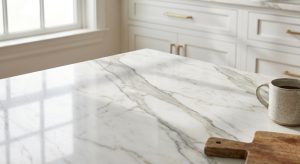
When you choose quartz for a waterfall countertop, you are selecting a material engineered to provide comprehensive care for your design needs. Quartz countertops are crafted by combining natural quartz crystals with polymer resins and pigments, creating a durable, non-porous surface. This process adds flexibility to the final product in terms of color and pattern consistency—meaning you can find options that range from a softly marbled look to a striking contemporary style. Because quartz is less prone to natural imperfections than mined stone, the end result is a uniform appearance that can seamlessly wrap around the edges of an island or peninsula.
Benefit 1: Non-porous protection
One of the defining features of quartz is its non-porous structure. Unlike materials that require sealing, such as granite or marble, quartz naturally resists moisture and bacteria penetration. Dropped liquids, from wine to cooking oils, are easily wiped away before they can soak into the surface. This benefit reduces the risk of permanent staining and simplifies your daily cleaning routine. You do not have to worry about periodic sealants or about small cracks housing germs that compromise your home’s cleanliness. The non-porous aspect also promotes a more hygienic environment overall.
Benefit 2: High resistance to scratches and chips
Quartz is known for its inherent strength. According to data from HGTV, quartz is harder than many common countertop materials, offering excellent protection against accidental scratches from sharp utensils. You still want to use trivets and cutting boards to preserve the surface’s polished look, but in everyday activities, quartz stands up well to the demands of cooking, hosting, and family gatherings. This resilience also matters for a waterfall design, as the exposed sides are less likely to show wear and tear over time.
Benefit 3: Uniform color and pattern
While natural stones have unique veining, quartz gives you the option of a more consistent pattern. You can match the top surface exactly with the waterfall sides, ensuring a cohesive design flow that highlights the elegance of this style. If you appreciate a modern, sleek ambiance, you will find quartz particularly helpful. Leading manufacturers use color pigments to maintain uniform hues, so the final look is controlled and predictable. That means you can trust the final product to maintain the color vibrancy that originally captured your attention.
Benefit 4: Low upkeep and longevity
Unlike other materials that may need resealing or specialized polishes, quartz only requires a normal wipe-down with mild soap and a soft cloth. The simplicity of quartz upkeep is partly why many homeowners and professional designers gravitate toward it. This convenience factor is especially important when you want a hassle-free process. Because you do not have to add sealers or re-polish the surface, quartz stands out as an option that saves you both time and money in the long run.
Weigh differences among other materials
Before you finalize your choice, it helps to compare how quartz measures up against alternative surfaces like marble, granite, and solid-surface materials. Each option has strengths, but understanding where quartz excels can make your decision more confident and well-informed.
| Material | Porosity | Maintenance | Pros | Cons |
|---|---|---|---|---|
| Quartz | Non-porous | Mild soap, soft cloth | Highly durable, scratch-resistant, consistent patterns | Susceptible to heat damage if hot pans are placed directly |
| Granite | Porous | Requires periodic sealing | Natural look, heat-resistant | Can stain if spills remain, variable patterns |
| Marble | Porous | Must seal regularly | Luxurious appearance, classic aesthetic | More prone to etching and staining |
| Solid-Surface | Non-porous | Occasional buffing or repairs | Seamless, easy to shape for custom designs | May scratch or burn under high heat |
Considering granite and marble
Although granite brings a natural charm to any kitchen, it often requires regular sealing to prevent stains. Some individuals enjoy the uniqueness of a granite slab, but for a waterfall design, matching up veins or patterns can become complicated. Similarly, marble exudes a timeless, upscale feel but needs frequent attention to avoid permanent etching and damage from acidic substances. If you want a bold waterfall feature that is low-maintenance and uniform, quartz may serve you better in the long term.
Looking at solid surfaces
Solid-surface products also provide a seamless finish, but they can be more prone to scratches or burns. They are repairable, but upkeep might be more frequent. If your ultimate goal is to combine ease, durability, and bold aesthetics, quartz often rises to the top of the list. For instance, a quartz waterfall edge typically has the stamina to handle everyday bumps without the worry of exposing color inconsistencies below the polished exterior.
Discover reasons to go waterfall
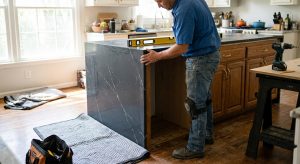
A waterfall countertop extends the surface material down one or both sides of a cabinet or island. You might initially be drawn to the striking visual effect, but there are deeper reasons to choose this design. Aligning with the supportive environment that encourages growth and transformation in any space, a waterfall design shifts the focus to elegance and protection.
Visual continuity and flow
The primary reason homeowners opt for waterfall edges is the eye-catching, continuous flow of the surface. You maintain the same color and pattern from top to floor, lending a harmonious appearance to the kitchen or bar area. According to Reborn Renovations, the material “pours over” the edge, adding a minimalist touch that modern interior designs favor. If you want to showcase the subtle sparkle or swirl in your quartz selection, a waterfall edge naturally highlights this feature.
Added protection for the base
Waterfall countertops also serve a protective function. The quartz panel that covers the cabinetry below can guard against scuffs, spills, and accidental knocks. This protective layer reduces the likelihood of damage to the wood or hardware beneath, meaning you can rely on a longer-lasting base. In turn, you protect your overall investment and reduce the need for repeated repairs—a benefit that promotes peace of mind.
Creating a focal point
If you are remodeling your space, incorporating a waterfall countertop can help you achieve a sense of empowerment by turning a functional fixture into an artistic statement. You can match your countertop’s tone with the rest of the room’s color scheme, or you can use a bold quartz pattern that stands out in contrast. Either way, a waterfall edge often becomes a conversation piece. If you want to spark a fresh, inviting mood in your home, a waterfall countertop sets the stage by connecting form and function in a striking way.
For additional information on the visual statement this style can make, check out the waterfall countertop marble elegance discussion, which offers perspectives on how different stone materials stack up in terms of aesthetics.
Evaluate cost and installation factors
While quartz waterfall countertops are undoubtedly appealing, it is wise to consider the price and labor factors involved in installing them. This approach acknowledges that cost can sometimes be a point of stress. By examining relevant data, you can plan effectively and streamline your decision process.
General price range
Waterfall countertops, including quartz, often involve higher costs than a standard countertop because of the extra material needed for the sides and the added labor to ensure precise alignment. According to Reborn Renovations, waterfall countertops can range between $60 and $200 per square foot, depending on the type of stone and complexity of the project. Quartz typically sits in the middle to upper range, though you might find more budget-friendly options if you select simpler patterns or standard thicknesses.
Factors that influence pricing
- Thickness of the slabs: Waterfall edges tend to look more refined with thicker slabs, which might cost more initially.
- Complexity of the cuts: The craftspeople must align the top and waterfall edges to present a seamless look, often requiring detailed miter cuts.
- Fabrication precision: Most quartz is cut on CNC machines to ensure accuracy. However, the extra labor can raise overall fabrication expenses.
- Regional variation: Costs vary by location, so check local rates to get the most accurate estimate.
If cost is an area of concern for you, it may be worthwhile to explore the cost of waterfall countertop per square foot page for more specific insights based on your region or custom design requests. Doing so will help you budget more accurately and reduce surprises.
Installation advises
Working with an experienced fabricator is crucial for preserving the pattern and color consistency along the waterfall edges. Even minor alignment errors can stand out in a design that emphasizes continuity from top to side. Be sure to discuss any particular stressors in your household, such as heavy daily use or the presence of children who might accidentally damage the corner edges. Communicating your needs will allow your installer to suggest edge profiles that strengthen the corners and ensure they line up perfectly.
Maintain your quartz countertops properly
Though quartz is known for strength and longevity, it still deserves ongoing care and attention to ensure it stays in pristine shape. Like developing a supportive environment in any journey toward improvement, routine maintenance keeps your countertop looking new and feeling solid under daily use.
Essential cleaning routine
You can typically maintain quartz with mild soap, water, and a soft cloth. For stubborn messes, consider a cleanser that is specifically formulated for stone surfaces, or use a gentle mixture of water and dish soap. Avoid harsh abrasives that could dull the finish over time. Prompt cleanup of spills—especially acidic substances such as lemon juice or wine—keeps the surface free from potential discoloration.
Preventing heat damage
Although quartz is heat-resistant, you will want to use trivets or hot pads when placing hot pans or bakeware on your countertop. The resin component in quartz is susceptible to extreme temperatures, and direct contact with high heat could cause discoloration or cracking. By taking a simple precaution, you extend the lifespan of your waterfall countertop without much added effort.
Guarding corners and edges
The cascading edges of a waterfall design can be prone to chipping if they endure frequent collisions with heavy objects or high foot traffic. Ensure that the space around your island is wide enough for you or your guests to move comfortably, reducing the risk of accidental bumps. If your household has a lot of activity, you can discuss corner protectors or slightly rounded edges during the installation process. For more day-to-day upkeep suggestions, you might find resources like waterfall countertop maintenance tips beneficial when you are refining your cleaning routine.
Explore design possibilities for kitchens
A waterfall countertop can instantly shift the mood of your cooking or entertaining area. The supportive environment created by sleek lines and continuous surfaces resonates with individuals seeking both aesthetic enjoyment and practical functionality. Because quartz is available in a vast array of colors, you can tailor your countertop look to your cabinets, flooring, and other decorative elements.
Pairing with complementary features
When you coordinate waterfall edges with backsplashes or accent walls, the result can feel particularly cohesive. Some homeowners also choose matching quartz for their waterfall backsplash waterfall continuity, effectively unifying horizontal and vertical surfaces. This approach can create a thoroughly modern look that ties the entire room together. Alternatively, you could mix and match materials—perhaps combining a neutral quartz on your countertops with a more dramatic backsplash or accent.
Integrating an island focal point
If you have an island in your kitchen, a waterfall design can be a remarkable focal point. By letting the quartz flow down both sides, you convey a sense of unity that emphasizes sleek geometry. Some designs include an overhang for seating, creating a comfortable nook for quick meals or social gatherings. This approach merges style and practicality, empowering you to highlight the island as the heart of your kitchen. If you want more inspiration, visit waterfall countertop design trends to review popular color palettes and styles.
Considering other surfaces
If you are intrigued by using different materials for a waterfall design, quartz is not the only option. You can also consider natural stones like granite or quartzite. While granite demands more sealing, you may find it visually appealing if you prioritize a one-of-a-kind slab. Likewise, quartzite has a natural shimmer and a range of hues, making it a rising contender for statement counters, as noted on the quartzite waterfall durability benefits page.
Review frequently asked questions
Below, you will find five common questions individuals have when considering quartz waterfalls. These FAQs aim to give you more clarity so you can tackle any lingering concerns head-on.
-
Is a quartz waterfall countertop easy to clean?
Yes. Quartz’s non-porous surface makes it resistant to staining, and cleaning only requires mild soap and water. This is especially valuable in high-traffic kitchens. -
Do I need to seal my quartz waterfall countertop?
No. Unlike granite or marble, quartz does not need to be sealed. It is manufactured to be inherently sturdy and non-porous, saving both time and money. -
Can a waterfall countertop be repaired if it chips?
Minor chips can be addressed with professional repair kits, although larger damage may require a trained technician. It is best to talk to your fabricator about corner reinforcements and other preventative measures if you are especially concerned about chipping. -
How much does a quartz waterfall installation cost compared to a standard countertop?
A waterfall design is generally more expensive because it needs more material and labor. Still, you may find that the aesthetic payoff and the practical benefits of quartz justify the extra investment. For exact pricing, consult the cost of waterfall countertop per square foot guide. -
Is quartz heat-resistant enough for a busy kitchen?
Quartz can handle everyday heat from dishes but always use trivets or pads under hot cookware to prevent thermal shock. This protective habit is useful for maintaining an attractive finish over the long term.
Conclude with lasting confidence
Choosing a quartz waterfall countertop can help you experience both emotional reassurance and tangible benefits in your kitchen or entertainment area. From the uniform beauty of engineered stone to the robust practicality of a waterfall edge, quartz supports your goals of having a stylish and long-lasting space. By carefully weighing cost, installation concerns, and day-to-day maintenance, you can approach your renovation with optimism.
This choice simplifies your cleaning routine, reduces the risk of stains or warping over time, and provides you with a unique focal point you can enjoy for many years. Whether you are attracted to a minimalist design or a bold, eye-catching statement, quartz can align with your vision. If you remain curious about the full scope of what a waterfall countertop entails—especially in terms of design possibilities or advanced finishing options—a wealth of resources awaits you, including waterfall countertop granite benefits for those considering different stone types.
Ultimately, a waterfall countertop made of quartz embraces the supportive, empowering spirit you may be looking to create in your home. It encourages consistency and harmony, much like a holistic approach to any major life decision. From the moment you lean into your island to chat with loved ones to the times you prepare meals for friends, quartz stands strong. By selecting a durable, attractive material, you affirm a commitment not only to your home’s aesthetic but also to a future built on thoughtful, high-quality choices.