Understand waterfall countertops
Choosing the right partner for your premium stone installation can feel daunting, especially when you want your kitchen or bathroom to achieve a distinct, upscale look. This is where waterfall countertop specialists can guide you toward a strong, long-lasting result. By focusing on craftsmanship, precision, and a supportive experience, these experts help ensure you get the best out of quartz, marble, granite, and other solid-surface materials.
Waterfall countertops get their name from the way the stone or surface cascades seamlessly over the edge of a countertop down to the floor. This style brings a modern, sculptural element to your home, transforming an ordinary kitchen island or vanity into a focal point. Whether you have been envisioning a subtle, sophisticated approach or a bold, dramatic statement piece, understanding how waterfall edges work will help you see why they are so popular among homeowners.
Defining the concept
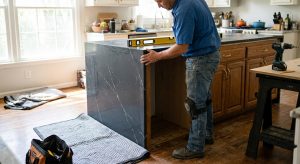
A waterfall countertop is created when the material continues past the horizontal countertop surface and extends vertically down one or both sides. In standard countertop designs, you see the front edge or a small side panel, but in waterfall layouts, the countertop itself continues downward in a unified piece. This design style has roots in Art Deco and mid-century aesthetics (BHG), yet remains perfectly suited to contemporary and transitional interiors that appreciate clean lines.
By selecting and installing the same material on the top and sides, you get a lavish, cohesive flow. Experts typically use precision cutting with equipment such as CNC laser cutters (Real Simple) to achieve nearly invisible seams. This craftsmanship brings out the stone’s natural beauty and complements other design elements, especially if you opt for a statement-making quartzite, marble veining, or richly colored granite.
Why they are popular
Homeowners often choose waterfall countertops for their timeless elegance. Aside from their visual appeal, these installations protect the sides of your cabinets from daily wear and tear, extending durability (O’Hanlon Kitchens). Some appreciate that these countertops act as a stylish barrier, while others simply love the seamless, spa-like vibe they bring to a kitchen or bathroom.
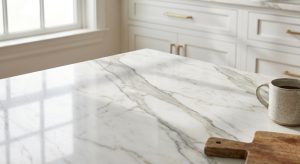
A waterfall edge is also an opportunity to highlight the unique markings or veining of the material you select. By showcasing the same pattern on both the surface and the side, you create a statement piece that exudes harmony and refinement. When paired strategically with backsplashes, accent lighting, or contrasting cabinetry, waterfall countertops can become a memorable centerpiece that welcomes guests into a supportive, inviting environment.
Identify the unique challenges
Although waterfall countertops can transform your space into a work of art, the process of selecting and installing them has unique challenges. You may face questions about how to handle precise measurements, fixture placements, or how to incorporate additional elements like seating and power outlets. By recognizing these challenges early, you or a loved one can work with professionals who offer tailored guidance.
Precision in fabrication
Waterfall countertops require careful attention to detail to ensure the edges align perfectly. If you are using a material with a strong veining pattern, matching that pattern up and over the edge can be tricky. For instance, natural stones such as marble or granite demand extra attention so that the flow looks uninterrupted. Fabricators often rely on advanced technology, like CNC cutting, to achieve seamless edges (Caesarstone). This approach helps ensure you receive the comprehensive care necessary for a successful result.
Choosing the right material
Not every material is equally suited for waterfall edges. While any solid-surface countertop can be fabricated into a waterfall design, quartz and engineered stones often provide the advantage of consistent patterns and strong durability, making them a popular choice among many homeowners (Oppolia Home). However, granite, marble, quartzite, and even wood or porcelain can also be fantastic options for those seeking an individualized plan that matches specific styles and color palettes.
When working with waterfall countertop specialists, you can explore a range of finishes and stone types. Evaluating your daily usage habits, overall design goals, and maintenance preferences is a major step in tailoring your plan. If you have your heart set on a richly patterned marble, for instance, a specialist will guide you through sealing requirements, so you preserve the striking beauty of your waterfall edges over time.
Budget considerations
Waterfall countertops add more material along the vertical drop, so it is natural to expect higher costs compared to standard countertops. Fabrication complexity matters too, since precise cuts for perfect seams typically involve specialized equipment. Labor costs, sealers, and adhesives factor into your overall budget, which can stretch by an extra $1,000 to $2,000 when factoring in the advanced fabrication work (BHG).
Despite the initial price tag, keep in mind that a waterfall edge can improve your home’s property value and curb appeal. As a result, many homeowners view it as an important investment. When you work with a committed team, you can expect individualized support, cost estimates that align with your budget, and clarity around how each step adds value to your final result.
Create a supportive environment
When you undertake a major renovation or remodeling project, the experience should feel empowering rather than overwhelming. By turning to knowledgeable specialists, you can receive the support necessary for lasting enjoyment of your new countertops. Professionals who listen to your needs and address concerns along the way create a safe, reassuring environment.
Working with specialists you trust
A supportive, trustworthy relationship forms the backbone of a successful project. If you are worried about timing, cost, or logistical details, open communication with your contractor goes a long way toward easing those concerns. Look for specialists who demonstrate not just technical expertise, but empathy for your aspirations. This reassurance fosters a sense of stability, allowing you to confidently explore different design options without fear of choosing the wrong path.
Should you desire a bold approach with granite or quartzite, or if you need a more budget-friendly quartz solution, you want to count on professionals who can juggle aesthetics and functionality in your favor. Consider scheduling a waterfall countertop project consultation to discuss your plans in detail. This step allows you to talk about everything from custom design details to potential add-ons like integrated lighting or specialized hardware.
Ensuring comprehensive care
Comprehensive care means having all factors thought through, from initial planning to the final polish on your countertop edges. A thorough design and installation plan covers:
- Site assessment to ensure enough space for the waterfall’s overhang.
- Detailed measurements that capture every angle and corner, sometimes provided by a waterfall countertop measurement service.
- Material inspection to ensure color consistency and the absence of flaws.
- Precise cutting and matching of patterns for a truly cohesive design.
- Proper sealing or finishing to extend durability and reduce maintenance.
By selecting custom waterfall countertop fabrication, you can secure a tailored plan that meets your unique needs and appeals to your personal style. You gain the benefit of working with a team who can anticipate the challenges of corners, seams, and angles. This thorough approach prevents unpleasant surprises and provides the supportive environment needed to see your vision through to its completion.
Tailored installation plans
In a perfect scenario, your countertop installation is a step-by-step journey, where each phase builds upon the last. After you settle on a design and material, your installation plan might follow these steps:
- Initial consultation: You discuss goals, budget, timeline, and any concerns that might arise.
- Material selection: You choose between premium quartz, marble, granite, and solid surfaces.
- Precision templating: Using waterfall countertop templating services ensures your material is cut to exact specifications.
- Fabrication and edge profiling: Whether you prefer a mitered corner or a signature edge style, using waterfall countertop edge profiling can result in a refined finish.
- Installation and sealing: With a focus on minimal visible seams, specialized teams handle installation before providing final touches like polishing and waterfall countertop sealing service.
Every household has its own dynamics, so an individualized plan allows you to coordinate with the rest of your renovation schedule.
Discover your material options
Your countertop is more than just a surface. It is often the backdrop for cooking, entertaining, or simply relaxing with family. Consequently, the materials you choose should reflect not just aesthetics, but also functional considerations such as durability, maintenance requirements, and daily foot traffic.
Premium quartz
Quartz is an engineered stone that blends crushed natural quartz with resins to create a non-porous, durable surface. Many choose it specifically for waterfall edges, thanks to its consistent patterns and robust structure (Caesarstone). If you love the look of marble but want something with lower maintenance, quartz can be an excellent substitute. A waterfall quartz countertop installation will also require resealing less often—often not at all—compared to more porous stones.
Marble
Timeless and graceful, marble offers a refined quality that can instantly elevate your kitchen or bathroom. If you choose waterfall marble countertops, you will find the characteristic veining can be showcased beautifully over the 90-degree angle. Remember that marble is more porous and soft than quartz or granite, so you should be prepared for ongoing maintenance and potential resealing. However, many homeowners see marble’s natural patina and aging process as part of its unique charm.
Granite
Granite remains a classic choice for all kinds of countertop projects. It is a highly durable natural stone that resists heat and everyday wear. When you opt for a waterfall granite countertop installation, you can tailor your selection to emphasize color, pattern, or veining. Because granite is natural, there can be variations in the slab, so matching patterns on vertical edges might require extra care. A specialist’s guidance will be invaluable in achieving that seamless effect.
Solid surfaces
If you want an alternative to stone, consider solid-surface materials. These can include acrylic blends designed to look like stone, wood-based surfaces, or even porcelain. Many of these materials mimic the look of natural stone while offering advantages like easier repairs or a wide range of color options. Regardless of which solid surface entices you, the key is to work with a fabricator who can handle its particular properties.
Consider design enhancements
Beyond selecting the stone type, you may want to integrate complementing features that support your countertop’s function and style. A thoughtful approach to design enhancements fosters an uplifting atmosphere, ensuring that your new surface meets your needs for years to come.
Backsplash integration
A waterfall countertop seamlessly merges the side with the floor, so it is natural to consider how your backsplash ties in overhead. Matching the same material for both can enhance a sense of continuity in the design (Real Simple). A coordinated waterfall countertop backsplash design is particularly striking in kitchens with accent lighting, where you see the continuous pattern flow from top to side to floor. If you prefer some contrast, that can also work beautifully: a bold or darker backsplash highlights the waterfall edges even more.
Island focal points
One of the strongest arguments for waterfall edges is their ability to transform your kitchen island into a focal piece. If you have an open-concept layout, an island with a striking waterfall edge can anchor the entire space. Dark cabinets, brass hardware, and other design elements can be curated to showcase your stone’s color or texture. Some homeowners choose a thicker, chunkier countertop, while others go minimal and ultra-contemporary with a thinner, seamless design. Either way, the island becomes a supportive space, both for casual dining and for hosting unforgettable gatherings.
Follow a step-by-step process
A step-by-step approach not only clarifies each stage of the project, but also encourages an atmosphere of calm and assurance. Instead of rushing decisions, you can rely on a clear blueprint to guide you from your initial call to the final sealing. This comprehensive process fosters confidence, which helps reduce any remodeling jitters.
Initial consultation
Your journey toward a waterfall countertop usually starts with a consultation that outlines the scope of your project. At this point, you might discuss your budget, the overall layout of your space, and the look you want to achieve. An experienced contractor or company will walk you through your options, highlight any potential obstacles, and propose solutions. This essential conversation sets the tone for your unique project by ensuring everyone shares the same vision. You could even explore a waterfall countertop cost estimate to see how different material choices compare.
Precise measurement and templating
Templating is the process of creating a pattern that fabricators will use to cut your counter. Accurate templates prevent alignment issues and unsightly gaps. A waterfall countertop measurement service involves scanning, mapping, or measuring your cabinets and desired overhang dimensions. By addressing even the minor details—like the placement of outlets or seating clearance—professionals help ensure a smooth outcome.
Fabrication and installation
Once you have chosen your material and confirmed proper measurements, fabrication begins. The fabricators cut your slabs to match both the horizontal surface and the vertical drop. Corner mitering is a common technique that unites two slabs with precise angles, so the seam appears minimal. The next step is a seamless waterfall countertop installation. Installers carefully fit everything into place, then secure it with commercial-grade adhesives designed for stone or solid-surface materials. A final polish or sealing step, such as the waterfall countertop sealing service, ensures the material remains strong and beautiful long-term.
Benefit from professional support
You might wonder if a DIY approach is feasible. While smaller renovations can sometimes be handled with creativity and patience, waterfall edges are best left to experts who have the requisite training, experience, and equipment. This professional support offers advantages that can make your entire remodeling journey more enjoyable and successful.
Durability and longevity
Waterfall edges subject the countertop material to more potential contact with foot traffic, pets, and household items. To protect your investment, it is crucial to have precisely matched seams and well-executed edge profiles. This aspect of the process becomes much simpler when handled by seasoned specialists. By ensuring the correct adhesive types, sealing procedures, and finishing touches, professionals extend the life span of your new countertop.
Customization and personalization
A hallmark of supportive professional guidance is the willingness to customize. Maybe you would like to integrate a curved waterfall design instead of a typical 90-degree angle. Or perhaps you envision a double waterfall with both sides dropping down. Whether you need a residential waterfall countertop installation or a commercial waterfall countertop installation, specialists can adapt each design to suit your unique taste and space configuration. This individualized approach guarantees you receive exactly what you want, rather than settling for a generic solution.
Know the cost influences
It is completely normal to want clarity about budget concerns before diving into a waterfall countertop project. This open dialogue is part of building trust and ensuring you have the information you need to make a confident choice.
Material selection and thickness
Material choice is a primary cost factor. Quartz, for example, typically ranges from $40 to $100 per square foot, plus installation fees (Caesarstone). Natural stones like marble or granite can trend somewhat higher, especially for luxurious or rare colors. Thicker slabs—2 to 3 inches (Caesarstone)—can create a bold, statement-making style but may drive up expenses due to weight and fabrication requirements.
Fabrication complexity
Any intricacies in your design, such as corner mitering, pattern matching, or integrated seating, add to fabrication time. Additional cuts and design elements require specialized equipment. This complexity can lead to higher labor fees, which often prove worthwhile when you witness the seamless, visually captivating result. Some specialists also provide a waterfall countertop timeline management service to help you coordinate your renovation schedule more effectively.
Long-term value
While the upfront cost might seem steep compared to standard countertops, the long-term value is significant. A stunning waterfall edge can attract prospective buyers if you decide to sell your home, making the installation an investment that balances personal enjoyment and financial sense. Because of its solid construction, your countertop may require fewer repairs, particularly if you choose resilient materials and maintain them well. Should you ever need a minor touch-up, a waterfall countertop refinishing service can restore that fresh look without replacing the entire surface.
Frequently asked questions
What is the ideal material for a waterfall countertop?
The ideal material depends on your lifestyle, budget, and aesthetic preferences. Quartz, marble, granite, and quartzite are all popular choices. Quartz, however, is often praised for its durability and consistent pattern, especially if you prefer minimal maintenance. For a completely natural look, marble or granite might be more appealing, while quartzite can offer a blend of both elegance and strength.
Does a waterfall edge cost much more?
A waterfall edge typically includes the additional cost of vertical slab material plus more complex fabrication. Depending on location and complexity, you can expect an extra $1,000 to $2,000 in fabrication costs alone (BHG). Nonetheless, the visual impact and added property value often offset these costs for homeowners who value a dramatic focal point.
How do I maintain a waterfall countertop?
Basic cleaning with a soft cloth and a gentle cleanser usually suffices. For porous stones like marble, resealing is crucial every few years. Quartz requires minimal upkeep, as it does not need regular sealing. If you want extra protection, schedule a waterfall countertop care maintenance service. Professionals can also repair small chips or scratches, ensuring your countertop remains elegant over time.
Can I install outlets on the waterfall side?
It is possible to install outlets on the side of a waterfall countertop, though it can be challenging and might slightly affect the seamless look. Many designers opt to hide outlets underneath the overhang or in other discreet places to maintain a sleek profile (O’Hanlon Kitchens). Working with a specialist who respects both style and function helps you find the best solution.
Should I consider a DIY approach?
Due to the high level of precision and specialized equipment required, a do-it-yourself approach for waterfall edges is often impractical. Enlisting the help of professionals, including waterfall countertop specialists, ensures that every detail is handled thoughtfully, minimizing the risk of costly errors. You gain peace of mind from knowing each step has been carefully executed by experienced hands.
Whether you prefer the classic elegance of marble, the practicality of quartz, or the timeless charm of granite, a waterfall countertop can become the standout feature that transforms your space. By partnering with specialists and adopting a comprehensive plan, you gain more than a beautifully installed surface—you gain the reassurance, supportive environment, and tailored solutions necessary for a truly remarkable home renovation. From initial measurement to final sealing, every stage can be guided by a respectful, empathetic team focused on delivering the best for you or a loved one. Embrace the serenity that comes from a job done with care, and enjoy your new waterfall countertop for many years to come.