Introduction
If you want a dramatic upgrade to your kitchen island or bathroom vanity, waterfall granite countertop installation is one of the most visually appealing ways to elevate any space. By extending the granite slab down the side of your cabinets or island, this sleek design adds architectural flair and instantly draws the eye. Beyond aesthetics, you gain exceptional durability, protection for your cabinetry, and an overall premium feel. In this guide, you will explore everything you need to know about the installation process, maintenance tips, material comparisons, and planning considerations, so that you can decide with confidence whether a waterfall granite countertop is right for your home.
Explore waterfall granite installation
A waterfall design takes a standard counter surface and extends the granite vertically down one or both sides. This creates a continuous flow from the countertop to the floor that visually highlights your stone of choice. When friends and family walk into your kitchen or bathroom, their eyes will naturally be drawn to the graceful edge, offering a modern focal point.
Granite is a sought-after stone for this style because it combines natural patterns with extraordinary resilience. According to industry experts (BHG), the waterfall look has been around for decades, inspired by Art Deco movements. In the last 10-15 years, it has become an essential statement piece in contemporary kitchens. Installing a waterfall edge on granite usually involves larger slabs, precision cutting, and careful alignment to achieve a seamless mitered corner that appears to wrap around the cabinetry.
Why granite stands out
- Sturdy construction that holds up under everyday use
- Unique natural veining that adds character
- Excellent resistance to heat, scratches, and damage
- Long-term value and return on investment
Ultimately, you will gain more than an eye-catching design. You also create a protective barrier for your cabinets, ensuring that the area underneath is shielded from spills and scratches. While the upfront cost may be higher compared to traditional counters, many homeowners appreciate the enduring worth of this stylish feature.
Understand design advantages
Choosing a waterfall granite countertop has both aesthetic and functional benefits. By allowing the granite to “cascade” down, you create a continuous, unbroken pattern. If you pair this design with matching cabinets or use a complementary stone, it can pull your entire space together into a cohesive environment.
Creating architectural drama
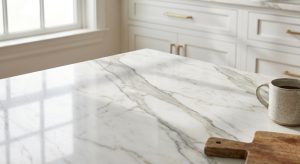
One of the main reasons homeowners select a waterfall-style counter is the stunning visual impact. The side panels act like a vertical gallery for your granite’s natural striations. Interiors that lean modern, contemporary, or transitional will especially appreciate this touch, which can amplify even the simplest cabinetry.
Protecting cabinetry
A waterfall edge offers more than just show-stopping visuals. That vertical panel helps shield your cabinet faces and corners from spills, kicks, and everyday wear. If you have children, pets, or heavy foot traffic, the extension of durable stone can prolong the lifespan of your cabinets. According to experts at European Granite Design, this protective advantage is a key motivator for many kitchen remodels.
Enhancing home value
When you invest in waterfall granite countertop installation, you benefit from a premium upgrade that can raise your property’s overall value. Real estate professionals often note that luxury details like waterfall edges make a strong first impression on prospective buyers. Whether you plan to stay in your home long-term or consider selling down the road, the timeless elegance of granite will continue to attract attention.
Compare popular materials
Granite is not the only stone suited for waterfall countertops. Quartz, marble, and even concrete are appealing options, each with its own advantages. However, granite has become a favorite among homeowners who want a balance of organic patterns, durability, and classic appeal.
| Material | Key Features | Maintenance Needs |
|---|---|---|
| Granite | Natural veining, high heat resistance, unique look | Requires sealing to protect from stains |
| Quartz | Non-porous, uniform design | Low maintenance, does not require sealing |
| Marble | Luxurious, timeless aesthetic | Susceptible to etching, needs regular sealing |
| Concrete | Industrial style, fully customizable | Needs sealing, can be prone to chipping or cracking |
- If you prefer cohesive patterns or want to coordinate veining, consider waterfall quartz countertop installation, which often replicates natural stone with less upkeep.
- For a classic, luxurious appeal, explore waterfall marble countertops.
- If creativity and a truly one-of-a-kind statement are top priorities, concrete’s custom shapes may be ideal.
While each material can be configured to flow seamlessly down cabinet edges, granite’s unique patterns and robust nature stand apart. With granite, you enjoy a blend of timeless appearance, durability, and considerable versatility.
Plan your project
Good planning helps ensure a smooth waterfall granite countertop installation. Before you commit, consider how you want the finished product to look, the materials you will use, and the practicalities of your space.
Take precise measurements
You will want accurate dimensions of your cabinets, including countertop length, width, and the vertical drop for the waterfall edges. If you want to feel confident in the final fit, consider scheduling a waterfall countertop measurement service. Experts can note every detail, including cabinet height and corner angles, to ensure the granite slab is cut exactly as needed.
Budget and cost estimates
Granite’s price can vary based on the slab’s origin, color rarity, and finish. The extra material needed for the waterfall extension also increases overall costs.
- Stone slabs (including granite) can range from $40 to $100 per square foot (Caesarstone).
- Precision cutting fees may add up to $2,000, especially when you include mitered edges.
- Resealing granite typically costs between $200 and $1,200, depending on the size and frequency of sealing.
Keep in mind that you will also want to factor in details like edge profiling, sink cutouts, and other finishing steps. For an in-depth overview, you can obtain a waterfall countertop cost estimate from a trustworthy fabricator.
Material selection
Granite comes in hundreds of colors, patterns, and finishes. Ultimately, the right choice depends on your kitchen or bathroom style, cabinet color, and personal taste. If you are still unsure, take advantage of a waterfall countertop project consultation. Many professionals offer an in-depth look at slab options and can highlight how various granites will blend with your existing decor.
Focus on installation
Waterfall edges require meticulous craftsmanship. According to NextDayGranites, the steps often include templating, fabrication, and precise mitering to ensure corners line up seamlessly. Below is a general look at what you can expect:
1. Templating
After your cabinets are in place, the fabricator creates a detailed template of the countertop. This step ensures each piece will fit your space precisely. A waterfall countertop templating service uses digital technology, tape measures, and other tools to capture every angle and corner. The template guides the cutting process.
2. Fabrication
Fabrication involves cutting, polishing, and shaping the slab. For a waterfall style, the fabricator must cut accurately at 45-degree angles so the edges unite perfectly. Tools like wet saws and diamond blades help maintain precision. Custom waterfall countertop fabrication can include specialized finishes, such as a bullnose edge or an ogee profile, but for a waterfall design, mitered edges are typically preferred for a sleek, continuous flow.
3. Dry fitting and adjustments
Before the granite is installed, a dry fit is performed to confirm all pieces align perfectly. Any small adjustments to the angles or joints are made now. This step is crucial for waterfall edges to achieve that virtually invisible line where the horizontal meets the vertical surface.
4. Installation
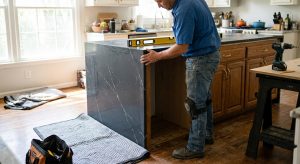
During installation, the countertop is carefully transported and placed on top of your cabinets. A matching vertical panel is positioned along the cabinet side and attached with industrial adhesive. Special clamps or braces might be used to ensure a tight fit while the adhesive cures. An expert crew can also coordinate seamless waterfall countertop installation, so the joints disappear into the granite’s pattern.
5. Sealing and final touches
Granite is inherently robust, but you should seal it to reduce the possibility of stains and moisture penetration. This protective coat often gets reapplied every one to three years, depending on use. If needed, professionals can also perform a final polish, making sure your surfaces gleam. Once sealed, you can immediately enjoy your new counter’s bold impact.
Maintain and protect your investment
Waterfall granite countertops are investments in both style and functionality. With routine care, you can keep your granite surfaces looking beautiful for many years.
Cleaning guidelines
Use a mild pH-neutral cleaner or a soft cloth with warm water and gentle soap. Avoid any harsh, acidic, or abrasive cleaning agents that could dull the stone finish. According to Lesher Marble, consistent cleaning will help keep the surface in top shape and reduce the need for frequent refinishing.
Regular sealing
Granite is porous, so sealing is essential. Check for signs that the protective layer is wearing off, such as water no longer beading on the surface. If you notice increased absorption, it may be time for a waterfall countertop sealing service. Sealing intervals vary based on the specific granite and usage, but most homeowners find that once a year or every couple of years is sufficient.
Repairs and refinishing
Even the most durable surfaces can experience scratches or chips over time. Luckily, small imperfections can often be polished out or filled. If you detect a crack or deeper scratch, consult a waterfall countertop refinishing service to evaluate your options. Proper repair helps maintain the stone’s structural integrity and visual appeal.
Long-term care tips
- Wipe up spills promptly to prevent staining
- Use cutting boards or trivets to avoid direct contact with knives and high heat
- Clean regularly with gentle products
- Consider an annual check-up with a professional to address any emerging concerns
By committing to basic upkeep, you preserve the value of your waterfall granite countertop and can enjoy the stunning beauty it provides to your kitchen or bathroom.
Discover customization options
One of the biggest draws of waterfall granite designs is the opportunity for customization. From edge profiling to matching backsplashes, you can tailor the look to suit your space perfectly.
Edge profiling
Whether you prefer a bold square edge, a classic ogee, or a beveled cut, edge style can affect the overall mood of your kitchen or bathroom. For waterfall designs, mitered edges are the go-to approach for a seamless wrap-around look. If you are exploring unique shapes or decorative elements, consider waterfall countertop edge profiling to find the best fit.
Backsplash continuity
If you want to extend the cohesive style further, you can select a waterfall countertop backsplash design. By matching the backsplash to your granite counters, you create a unified flow throughout the room. Waterfall edges blend incredibly well with full-height backsplashes, especially for those wanting a continuous pattern that stretches from the floor up the wall.
Vanity options
You can bring the same bold appearance of a waterfall edge into your bathroom. The vertical drop can enliven a vanity, protect the cabinets from water splashes, and reinforce the luxurious vibe of the space. For a closer look, consider waterfall vanity countertop installation. Bathrooms with limited square footage particularly benefit from these statement pieces, as they can visually expand the room’s depth.
Islands and peninsulas
Whether you have a cozy kitchen or a spacious one, a stone waterfall kitchen island or peninsula can transform the entire space. Granite’s vivid veining often appears more dramatic on a larger surface, making the waterfall effect even more eye-catching. If you ever wish to upgrade or modify this feature, a kitchen waterfall countertop upgrade service can guide you on refinishes or replacements down the road.
Frequently asked questions
-
How does waterfall granite countertop installation differ from a regular countertop install?
Waterfall installs require additional precision in shaping and joining. Instead of stopping at the cabinet’s edge, the granite wraps downward, forming a 90-degree angle. To achieve this seamlessly, installers cut the stone at a 45-degree miter and precisely align the pattern. -
Is granite the best material for a waterfall countertop?
Granite is an excellent choice for a waterfall layout because of its durability and natural veining. However, quartz, marble, or concrete can also produce stunning results. Your decision depends on how much maintenance you prefer, your desired style, and how you plan to use the space. -
How costly is a waterfall granite countertop?
Costs vary with the stone’s rarity, thickness, and the complexity of fabrication. Stone can cost between $40 to $100 per square foot, plus additional expenses for precision cutting and finishing. Typical fabrication fees for waterfall edges might run up to $2,000. -
Do I need to seal granite countertops often?
Granite typically needs sealing once a year or as soon as you notice the protective layer wearing off. The frequency depends on how heavily you use the countertop. A reputable waterfall countertop care maintenance service can guide you on your specific stone and usage levels. -
Can I install a waterfall granite countertop myself?
While some homeowners might handle a basic countertop replacement, waterfall granite edges are a more advanced project. The cutting, mitering, and alignment require specific skills, tools, and experience. Hiring professionals helps ensure accuracy and longevity.
Conclusion
Choosing a waterfall granite countertop installation means investing in a show-stopping centerpiece that seamlessly merges style and functionality. The design’s flow draws the eye, while granite’s sturdy nature guards cabinets and retains its stunning look for years to come. You can opt for custom edges, pair it with a coordinating backsplash, or even extend the concept into your bathroom for a unified theme across your home. If you want a modern aesthetic that still highlights the unique character of natural stone, it is hard to beat the waterfall effect.
From planning your budget and picking the perfect slab to final sealing and maintenance, each step should be approached with care. Professional services such as waterfall countertop contractor near me or a specialized waterfall countertop specialists team can ensure meticulous installation at every phase. When you are ready to explore or refine your design, remember to schedule a waterfall countertop project consultation so you can feel confident about achieving a truly personalized look.
Embrace the elegant beauty and lasting durability of waterfall granite countertops. With the right guidance and supportive care, you will enjoy a premium centerstage for cooking, gathering, and celebrating life’s everyday moments in a space that inspires comfort and pride.